Written by Paul Schicke Senior Expedition Designer
Updated: July 20, 2026 Published: July 07, 2026
Choosing the right yacht in the Galapagos can shape your entire journey.
With more than 35 years designing high-end adventure travel—and 25 of those focused on the Galapagos—I’ve helped thousands of travelers make this decision. And the truth is simple: not all Galapagos cruises are created equal.
I like to tell guests that the amazing Galapagos animals are always putting on a show. However, the yacht and company you choose determines how much of that wildlife show you’ll see, how intimate your experience will feel, and how deeply you'll connect with one of nature’s truly unique habitats.
Let’s start with the most important question.
Key Takeaways - How to Choose the Best Galapagos Yachts
The best Galapagos yacht depends on the experience you're looking for—factors like itinerary, group size, comfort, and onboard atmosphere often matter more than the yacht itself.
Small expedition yachts provide a more intimate way to explore the islands—offering personalized service, fewer guests, and closer connections with the destination.
Expert guides and thoughtfully designed itineraries have the greatest impact on your journey—helping you maximize wildlife encounters and experience the Galapagos beyond the highlights.
Choosing the right yacht means finding the right balance of comfort, exploration, and style—so your voyage reflects the kind of adventure you want to have.
Why Visit the Galapagos Islands in the First Place?
Understanding why savvy travelers seek out the Galapagos Islands in the first place will help clarify the best way to experience them.
There’s no other place on earth that compares to the Galapagos Islands for safely encountering rare animals up close in the wild. Animals here evolved without fear of humans, which means you often find yourself astonishingly close to them and you often have to watch where you are walking so you don’t step on them.
Here are just a few of the experiences visitors regularly enjoy:
Snorkeling with playful sea lions performing underwater acrobatics
Walking among giant tortoises whose parents were alive when Darwin visited
Watching waved albatrosses perform their sword-like courtship dance
Being surrounded by hundreds—or even thousands—of leaping spinner dolphins
Jumping into the water alongside bottlenose dolphins
Watching Galapagos penguins streak past underwater like torpedoes
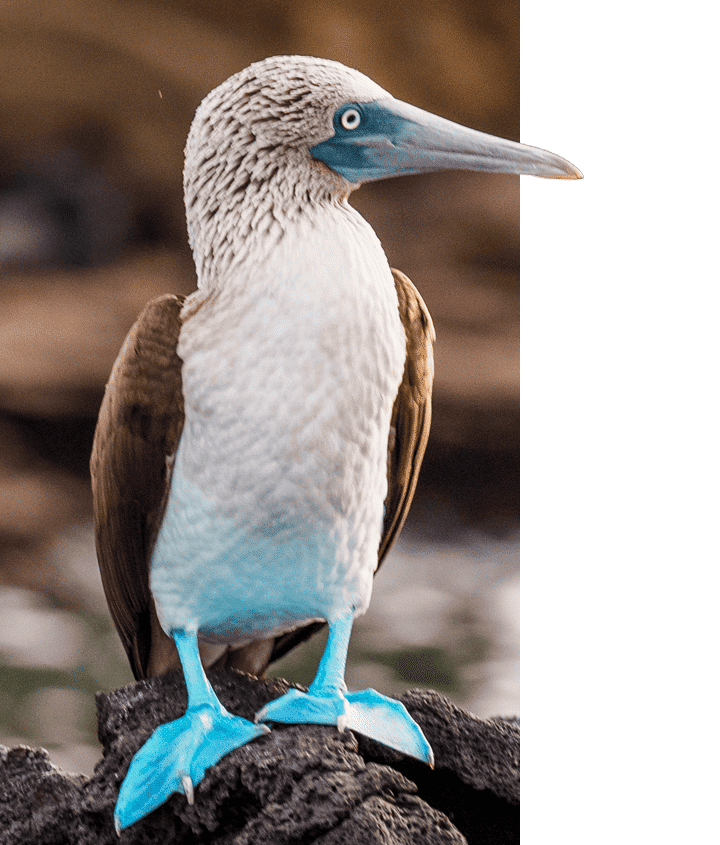
Seeing blue-footed boobies plunge into the ocean like javelins
Kayaking while orcas patrol nearby waters or blue whales surface beside your yacht
I could go on. Our Guests have experienced all of these and more.
In short, people visit the Galapagos for something rare in modern travel: authentic, close encounters with wildlife in their natural habitat.
Avoid Planning Your Trip Around Day Boats
Some travelers consider staying in hotels to avoid seasickness in the Galapagos. Ironically, this approach often creates the opposite experience.
A land-based stay still requires boats—typically small day boats transporting hotel Guests from port towns to National Park sites.
Remember:
97% of the Galapagos is protected National Park
Hotels sit in the remaining 3%
This means day-boat travelers often spend up to five hours a day navigating to reach visitor sites. As a result, they typically experience half as many landing sites and wildlife encounters compared with guests staying on a yacht.
There are other drawbacks:
Smaller boats are more prone to motion
Only a limited number of visitor sites are accessible via day boats.
Most islands have no population, no roads and no infrastructure so you can forget about driving to visitor sites like you can in a place like Hawaii.
The islands and Galapagos National Park visitor sites that offer the most extraordinary wildlife encounters are accessible only by boat.
Galapagos Cruises... The Quasar Way
Take a journey onboard one of the best small ship Galapagos Cruises and feel transformed. Our vision is to inspire travel, not tourism, and to provide our guests with the opportunities to establish profound connections with each destination. We wish to create authentic, exclusive, unique and meaningful experiences on both sea and land for each adventurer who steps on board with us.
The islands are the habitat. Your yacht becomes a floating safari lodge that moves quietly between them.
The greatest advantage?
You travel while you sleep.
Most navigation takes place overnight. Each morning you wake anchored beside your next landing site.
Typical days include:
Two wildlife landing excursions
Two snorkeling opportunities
Optional kayaking, paddleboarding or dinghy ride outings
Your Galapagos Naturalist Guides travel with you throughout the journey, interpreting wildlife behavior and ecosystems along the way.
Meanwhile the Crew takes care of everything else.
Many yachts service your stateroom twice daily while you are out exploring the islands. Gear such as kayaks, wetsuits, snorkeling equipment, and Zodiac-style dinghies called pangas are all provided.
If your goal is to spend as much time as possible inside the National Park, a yacht is by far the best way to experience the Galapagos Islands
What to Avoid When Choosing a Galapagos Yacht
Before diving into specifics, it’s worth mentioning that Quasar has experimented with nearly every type of vessel in the Galapagos over the past 40 years.
Since our early days operating in the islands, we’ve run yachts carrying as few as 8 Guests and as many as 48. Over the decades we have operated monohull yachts, trimarans, sailing vessels, and eventually a 48-Guest expedition ship.
The 48-Guest ship, while certainly better business from a capacity standpoint, taught us an important lesson. Although the vessel performed well operationally, it simply wasn’t ideal for the kind of intimate, wildlife-focused experience we wanted our Guests to have in the Galapagos. In short it was too many people for the park landing sites where guests must stay on single file trails.
Landing sites began to feel busier. Logistics took longer. Spontaneous wildlife moments became harder to act on quickly. Guests at the end of the trail often found it hard to hear the guides at the front of their group.
4 Critical Mistakes to Avoid When Planning Your Galapagos Trip-of-a-lifetime
DOWNLOAD THIS ESSENTIAL GUIDE TO AVOID THAT ARE MADE BY 90% GALAPAGOS TRAVELERS.
Fill out the form below and check your inbox in a few minutes.
Ultimately, we realized that smaller yachts created a far better experience. Over time we refined our approach and focused exclusively on vessels carrying 32 Guests or fewer, which we found to be the sweet spot for experiencing the Galapagos the way it was meant to be experienced—intimate, immersive, and close to nature.
With that perspective in mind, here are some things to avoid when choosing your Galapagos yacht.
Large Ships (48–100 Guests)
The Galapagos was never designed for crowds.
Visitor sites typically feature narrow trails under 1½ miles long. When large ships arrive, even if divided into smaller groups, everyone still moves along the same path.
That often means:
Waiting your turn to view wildlife
Standing far from your Naturalist Guide
Competing for space to take photos
Large Galapagos Ships: Pros and Cons
Large Galapagos ships can appeal to travelers who want more onboard space and a broader range of amenities.
However, in a destination where the most meaningful moments happen off the ship — on trails, in pangas,
while snorkeling, or face to face with Galapagos wildlife — the size of the ship can shape the intimacy, pacing,
and access of the entire experience.
Experience Factor
Potential Advantage
Potential Trade-Off
Onboard space
Large ships often offer more indoor lounges, dining areas, and shared spaces.
The experience may feel less intimate, especially when many Guests are moving through the same spaces and excursions.
Amenities
Some larger ships may include more onboard amenities, depending on the ship.
In the Galapagos, the heart of the journey is usually outside — exploring islands, watching wildlife, snorkeling, kayaking, and learning from Naturalist Guides.
Stability
Some large ships include stabilizers, which may help reduce motion at sea.
Ship comfort still depends on route, weather, sea conditions, yacht design, and each Guest’s sensitivity to motion.
Landing site experience
Large ships can accommodate more Guests overall.
Excursions may involve larger groups at landing sites, which can mean more waiting, more logistics, and a less personal pace on narrow trails.
Wildlife encounters
Guests still have access to remarkable Galapagos wildlife experiences.
Larger group sizes can make encounters feel less quiet, close, and unhurried — especially in sensitive wildlife areas.
Park access and flexibility
Large ships may follow well-established visitor routes within Galapagos National Park regulations.
Their size can limit access to certain visitor sites, anchorages, or more intimate expedition-style experiences.
Environmental footprint
Responsible operators can take steps to reduce impact through careful systems and practices.
Larger ships naturally carry more people, supplies, waste-management needs, and operational complexity in a fragile island ecosystem.
Best fit for
Travelers who prioritize ship scale, larger indoor spaces, and more traditional cruise-style amenities.
Less ideal for adventurers seeking a smaller, quieter, more personal Galapagos experience centered on wildlife, guides, and time in nature.
For many travelers, the most important question is not simply, “Which ship has the most amenities?”
It is, “Which style of Galapagos cruise will bring me closer to the islands?” In a place as rare and protected
as the Galapagos, a smaller yacht can make the journey feel more personal, more flexible, and more deeply connected
to the wild world just outside your door. To compare even more - Galapagos Yacht or Ship?
Accessibility to National Park Visitor Sites
The National Park restricts access to certain landing sites for vessels carrying more than 40 Guests due to environmental sensitivity.
Yachts carrying 40 Guests or fewer can access all park visitor sites.
The National Park recently decided to cap the number of 100 passenger yachts operating in the archipelago as well.
If you want the fullest access while minimizing environmental impact, smaller yachts offer a clear advantage.
When Large Ships Change the Moment
Years ago, while leading kayaking trips in the archipelago, I witnessed a scene I will never forget.
A mother sea turtle had spent the night digging her nest, laying her eggs and covering the nest. She was slowly making her way back down the beach toward the ocean.
Suddenly a group of about 80 people arrived from a large vessel.
They crowded around the turtle for photos, barely noticing the moment unfolding. They could care less that we were there and blocked our view of the sea turtle. My group could not wait to leave.
As we looked back, the mother turtle had turned around and headed back toward her nest—likely to protect it.
Even well-intentioned travelers can unintentionally change wildlife behavior when large groups arrive all at once. The good news is that the park's policy of requiring vessels to wait 2 weeks before returning to the same site means these overlaps of smaller vessels with larger ones has mostly been eliminated.
Time Lost to Logistics
Large ships also lose valuable time to operations.
Consider what it takes to prepare 100 Guests for snorkeling: wetsuits, fins, safety briefings, loading dinghies, and coordinating multiple groups. The larger the group, the longer everything takes—and the more spontaneous wildlife moments slip away.
I once witnessed the opposite while sailing along the remote western side of the archipelago.
Guests were enjoying lunch when the captain suddenly spotted a group of orcas preying on giant sunfish nearby.
Within seconds everyone left their tables. Life vests went on, and within five minutes we were already heading out in the Zodiacs.
What followed was one of the most spectacular wildlife encounters I’ve witnessed in my 25 years exploring the Galapagos—watching the orcas hunt in the wild.
About 30 minutes later we returned to the yacht, still buzzing from the experience. The crew had simply warmed up our lunches and we picked up the meal where we left off.
Moments like this are why small expedition yachts exist.
With 100 Guests, just organizing the group and loading the dinghies would have taken longer than the entire encounter. By the time everyone was ready, the feeding frenzy would have ended—and reheating lunch for 100 people wouldn’t be nearly so simple. Try jumping in with a pod of dolphins with 100 guests, basically that is a non-starter but it is a frequent occurrence on smaller vessels.
Choose Open-Air Viewing Decks
A wildlife photographer once asked me the difference between a competitor’s yacht and ours.
My answer was simple:
“Where would you take photos from on their yacht?”
Looking more closely, he realized the entire structure was enclosed in smoked glass and steel—almost like a floating casino.
Guests had no access to the bow and there was no main deck to walk around the outside of the yacht
Their only options were the stern or the top deck.
In a place where dolphins often ride the bow wake of yachts, manta rays leap from the water, and whales surface nearby, being stuck behind smoked glass makes little sense.
The Galapagos climate is welcoming year-round. The best place to experience it is outside.
The Problem with Sailing Yachts in Galapagos
Quasar once operated several sailing yachts in the islands.
Over time we phased them out for one simple reason: we rarely raised the sails.
The National Park issues strict navigation schedules—known as patentes—that determine where yachts must be at specific times.
Wind conditions rarely allow sailing vessels to meet these schedules reliably, so most end up motoring instead.
Because sailing yachts must accommodate masts and rigging, interior spaces are also often smaller.
Today only a handful of sailing vessels still operate in the Galapagos and when they do raise the sails it is only for show.
Look for Yachts with Full Walkaround Decks
Some of the most magical moments in the Galapagos happen unexpectedly.
Dolphins surfing the bow wake
Whales surfacing nearby
Flying fish scattering at night
Reef sharks circling beneath the yacht
The best way to experience these moments is aboard a yacht with 360-degree walkaround decks.
Many catamarans and modern designs restrict access with narrow side decks, balconies, or enclosed structures, i.e. you can’t walk to the front or down the sides of these vessels
When wildlife appears, everyone ends up crowding into the same viewing area.
A true expedition yacht allows you to walk freely all the way around the entire vessel.
Catamarans vs. Monohull Yachts
Over nearly 40 years operating in the Galapagos, Quasar has tried almost every vessel design imaginable.
We owned a 48-Guest ship.
We operated sailing yachts.
We even ran the world’s largest trimaran.
Each taught us something.
Pounding Waves
Our trimaran, named the “Lammer Law”, but nicknamed the “Slammer Law” by Guests—revealed a common issue with multi-hull vessels.
When waves strike the raised underside between hulls, the sound reverberates through the structure like a drum.
Smaller catamarans often experience this effect more frequently.
Monohull yachts avoid this because the hull remains continuously in contact with the water.
Stability and Seaworthiness
Catamarans feel very stable in calm seas due to their wide stance.
However, that same design can produce sharper motion in rougher conditions.
Monohull yachts—especially larger steel vessels—offer excellent dynamic stability, meaning they recover smoothly from waves approaching from the side.
Catamarans vs. Monohull Yachts in the Galapagos
When comparing Galapagos catamarans and monohull yachts, the right choice often comes down to motion at sea,
deck access, yacht design, and the kind of adventure you want. Catamarans can offer wide interiors and strong
stability in calm water, while monohull yachts are often favored for seaworthiness, smoother motion in rougher
seas, and open-air wildlife viewing.
Comparison Point
Galapagos Catamarans
Monohull Yachts
Stability in calm seas
Often feel very stable in calm water because of their wide beam.
May have slightly more natural movement in calm seas, depending on yacht design and stabilization.
Motion in rougher water
The raised underside can experience wave pounding, which may create a sharper motion in choppier seas.
Often provide a smoother, more reassuring motion in rougher water, especially when built with strong displacement and expedition use in mind.
Space and layout
Wide designs can allow for larger Staterooms and modern interior layouts.
Layouts often prioritize seaworthiness, outdoor access, shared social areas, and panoramic wildlife viewing.
Construction and durability
Many modern catamarans use fiberglass construction; comfort and durability depend on each yacht’s design, build, and maintenance.
Classic expedition-style monohulls can offer a stronger, more time-tested feel at sea.
Maneuverability
The wider beam may limit maneuverability in certain anchorages or sea conditions.
A narrower profile can support greater agility around island anchorages and landing sites.
Deck access and wildlife viewing
Some designs may limit full walkaround deck access.
Quasar’s monohull yacht design emphasizes open-air deck access, helping Guests stay close to the action outside.
Best fit for
Travelers who value wide interior spaces, modern styling, and stability in calm conditions.
Adventurers who value seaworthiness, classic yacht character, open deck access, and immersive wildlife viewing.
For a Galapagos adventure, the question is not only whether a yacht is a catamaran or a monohull.
The better question is whether the yacht helps you feel safe, comfortable, close to nature, and free to experience
the islands from every possible angle.
You Can’t Walk Around Most Catamarans
Most Galapagos catamarans are designed with narrow side decks or private balconies that limit access to the bow.
This means when dolphins start surfing the bow wake—or whales appear ahead—you may not be able to reach the best vantage point.
For a destination defined by wildlife encounters, that design limitation matters.
What to Look for in a Galapagos Yacht
After nearly four decades operating in the islands, Quasar ultimately settled on steel monohull yachts carrying 32 Guests or fewer.
This design solves many of the issues mentioned above.
What Makes an Ideal Galapagos Yacht
Fewer than 40 Guests for full park access
Steel or aluminum hull for strength and safety
360-degree walkaround decks for unobstructed wildlife viewing and photography
Ample shaded outdoor space to enjoy the Galapagos without being behind smoked glass
Experienced Captains and Naturalist Guides
Smaller groups it’s easier to hear your guide, move freely on trails, and experience wildlife without crowds.
You Get What You Pay For
The old saying holds true in the Galapagos.
The best Naturalist Guides, Captains, and Crew work aboard the best yachts because they can.
These vessels are their workplaces—as well as their home away from home for weeks at a time.
Their experience shapes everything:
safety
wildlife encounters
daily pacing
Guest experience
Attention to detail
When comparing options, read Galapagos cruise reviews carefully. Consistent praise for guides, crew, and service is often the clearest sign you have found the right expedition.
Final Thoughts - How to Make the Right Choice
Choosing the right Galapagos yacht is not about marble bathrooms or onboard entertainment.
It is about how deeply you want to experience the islands and how well the vessel is designed to serve your key reason for visiting the archipelago in the first place, namely experiencing those legendary peak wildlife encounters.
The best yachts are not floating hotels. They are expedition platforms designed for wildlife, exploration, and connection with nature.
Choosing a Galapagos yacht isn't about finding the newest ship or the longest list of amenities. It's about choosing the style of expedition that lets you experience the islands as they were meant to be experienced—immersed in nature, guided by experts, and surrounded by a small group of fellow adventurers. After four decades exploring these islands, we've found that's where the most unforgettable stories begin.
And those are the moments you will remember for the rest of your life.
Hello! My name is Paul. I am photographer, traveler, teacher and writer. I have extensive experience in travel to Galapagos, Peru, Patagonia and the western seaboard of South America specializing in ways travelers can experience these once-in-a-life destinations like locals on the road. Lover of wine, chocolate, travel, coffee, and helping others plan vacations of a lifetime!
Because some adventures don’t just show you the world, they change the way your family sees it. Last July, families from across the world stepped aboard Quasar’s Evolution yacht to follow in the footsteps of one of history’s greatest explorers, Charles Darwin himself. Led by Professor Kenneth Noll, who brings Darwin’s discoveries to life through …
What if you could anchor your love story in one of the world’s most awe-inspiring destinations? When you say, “I do,” renew your vows, or honeymoon in the Galapagos on a private Quasar yacht charter, your love takes center stage in a setting as epic as your story. If you’re thinking, but how does it …
At Quasar Expeditions, every journey begins with a question. What’s out there? Who will we meet? How will this place change us? One question we hear most often from curious guests is: Where does the name “Quasar” come from? The name “Quasar” sparks curiosity—and that’s exactly the point. It’s a nod to both our roots …
At Quasar Expeditions, we believe that travel at its best feels like coming home—only to a place you’ve never been. It’s that sense of awe when you stand on the rim of a volcano or lock eyes with a sea lion underwater. But we’ve always known that these moments come with massive responsibility. Today, we’re …