







- Home >
- Patagonia Luxury Tours >
- Antarctica Cruise + Patagonia Safaris
- Depart from
Punta Arenas, Chile - Add an Antarctica Cruise
to your Patagonia Safari - One expert team
for land & sea exploration
Your Journey to Antarctica Starts in Patagonia
Quasar now pairs a tailor-made private Safari in Torres del Paine with an intimate Antarctica air-cruise from Punta Arenas. A charter flight reaches King George Island in approximately two hours, replacing about two days at sea in each direction. The sample 16-day Journey brings together private exploration in Patagonia, small-scale expedition cruising along the Antarctic Peninsula, and one Quasar planning relationship from first conversation to final transfer.
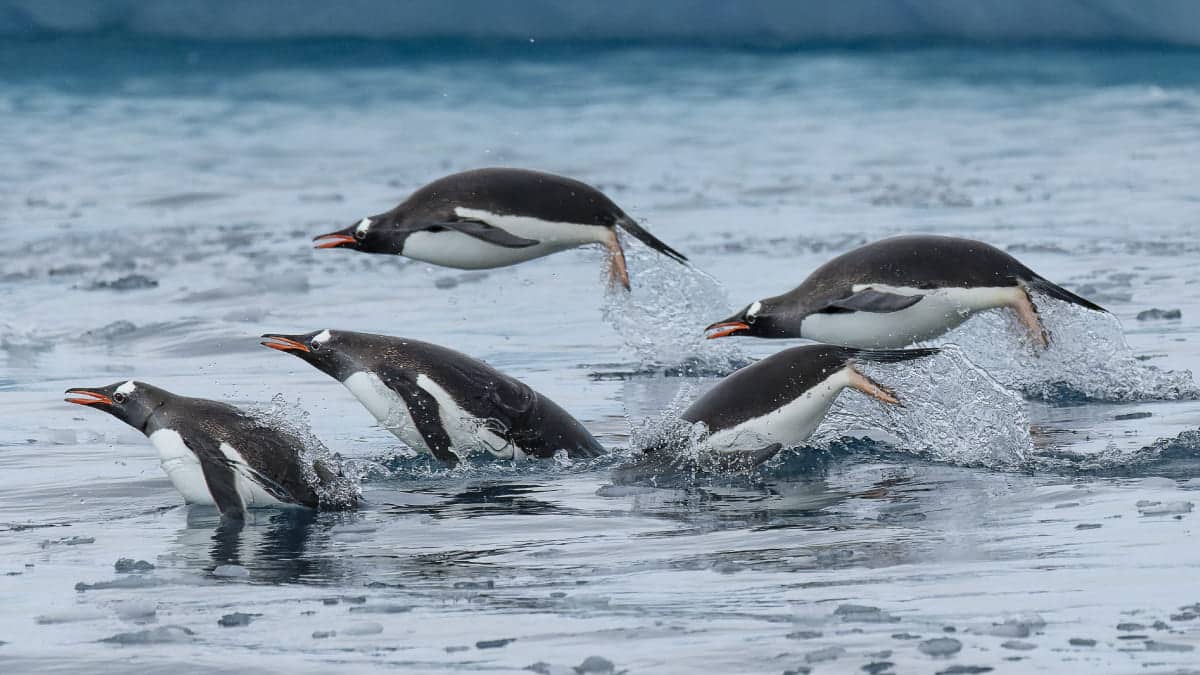
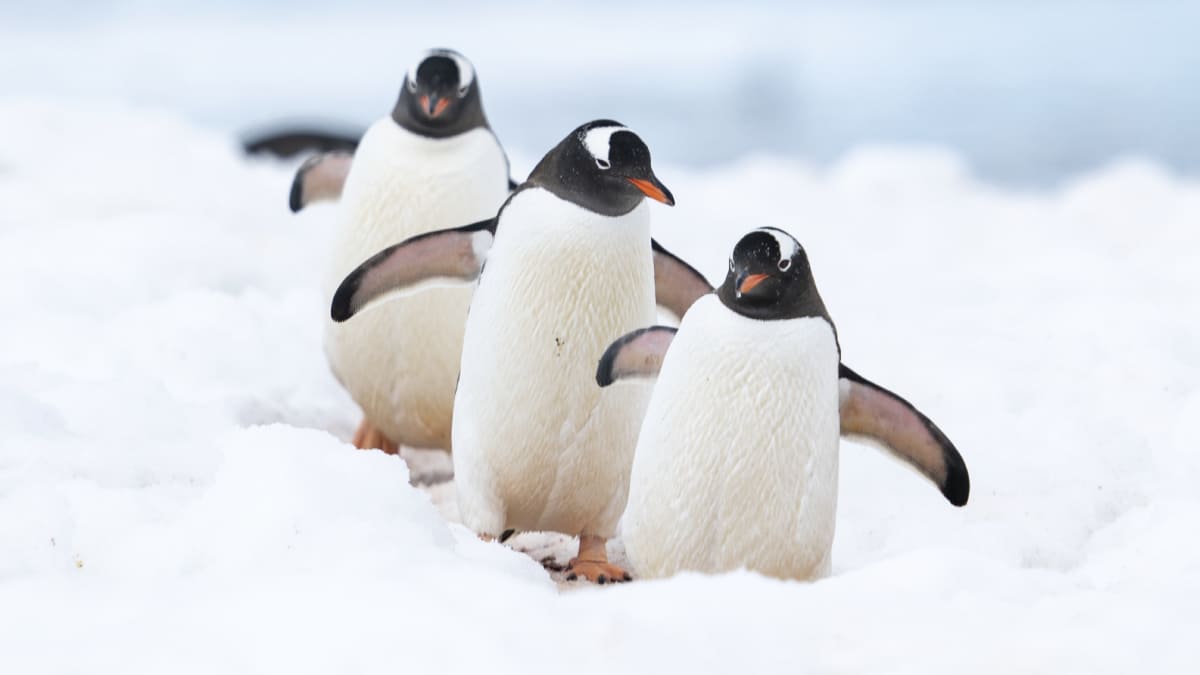
Antarctica is a land of absolutes. It’s the driest, coldest, windiest place on Earth, and home to the most remote post office on the planet. It’s the least densely-populated, too. It’s hard to gauge just how many millions of penguins live on the ice, but they outnumber resident researchers by thousands to one.
But here’s what most travelers miss in pursuit of their bucket-list adventure: Even though Southern Patagonia is one of the principal gateways to Antarctica voyages, most travelers simply pass through.
We think that’s a missed opportunity.
By flying over the Drake Passage with a Fly-Sail package, you can shorten your journey to and from the frozen continent by four days and use that extra time to explore another of the world’s best-preserved wildernesses instead. On one of Quasar’s signature Safari-Style private tours, you’ll see what it looks like when we put nature first and tourism second.
Based on a 7-Night Antarctica Experience | Double Occupancy
Includes: Excursions, Meals & Transfers
Patagonia & Antarctica Journey at a Glance
Two of the Southern Hemisphere’s most extraordinary wildernesses come together in one thoughtfully coordinated Journey.
| Journey detail | What to expect |
|---|---|
| Journey Length | Min. 16 days (7-Night Antarctica) |
| Patagonia experience | A tailor-made private Safari in Patagonia |
| Antarctica experience | An intimate expedition fly-cruise along the Antarctic Peninsula |
| Antarctica gateway | Punta Arenas, Chile |
| Flight to Antarctica | Approximately two hours to King George Island |
| Time saved | Approximately four days compared with sailing the Drake Passage in both directions |
| Antarctica group size | Up to 88 Guests |
| Patagonia travel style | Private Guiding and a Journey tailored to your interests and preferred pace |
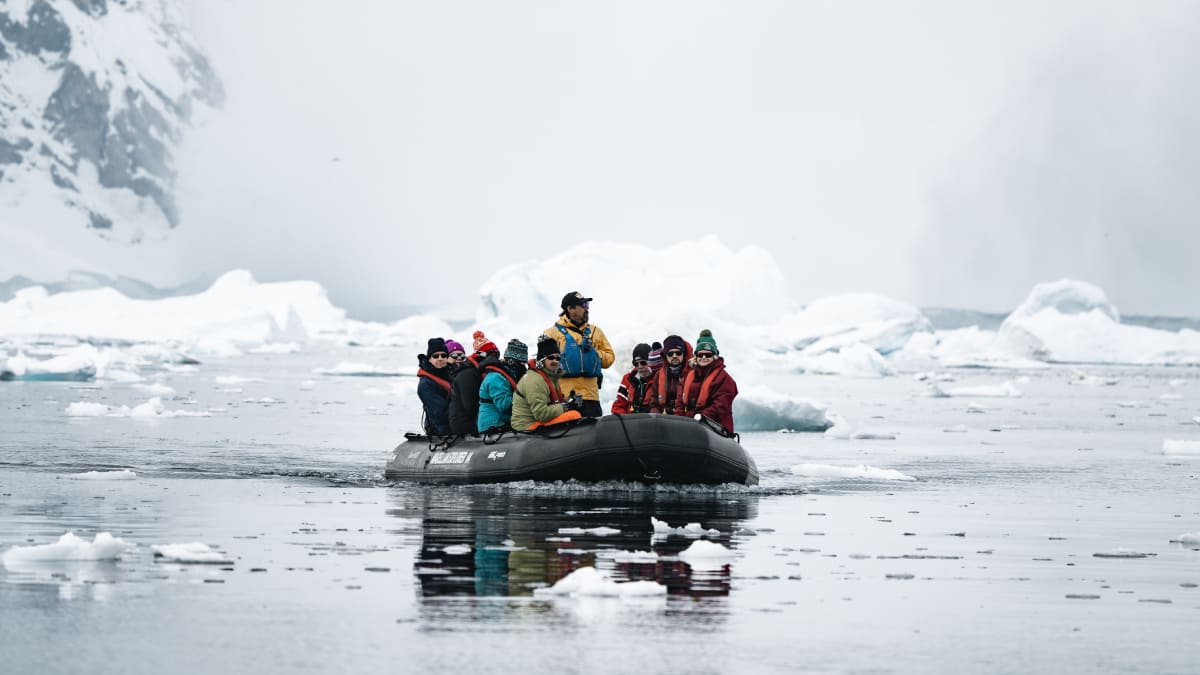
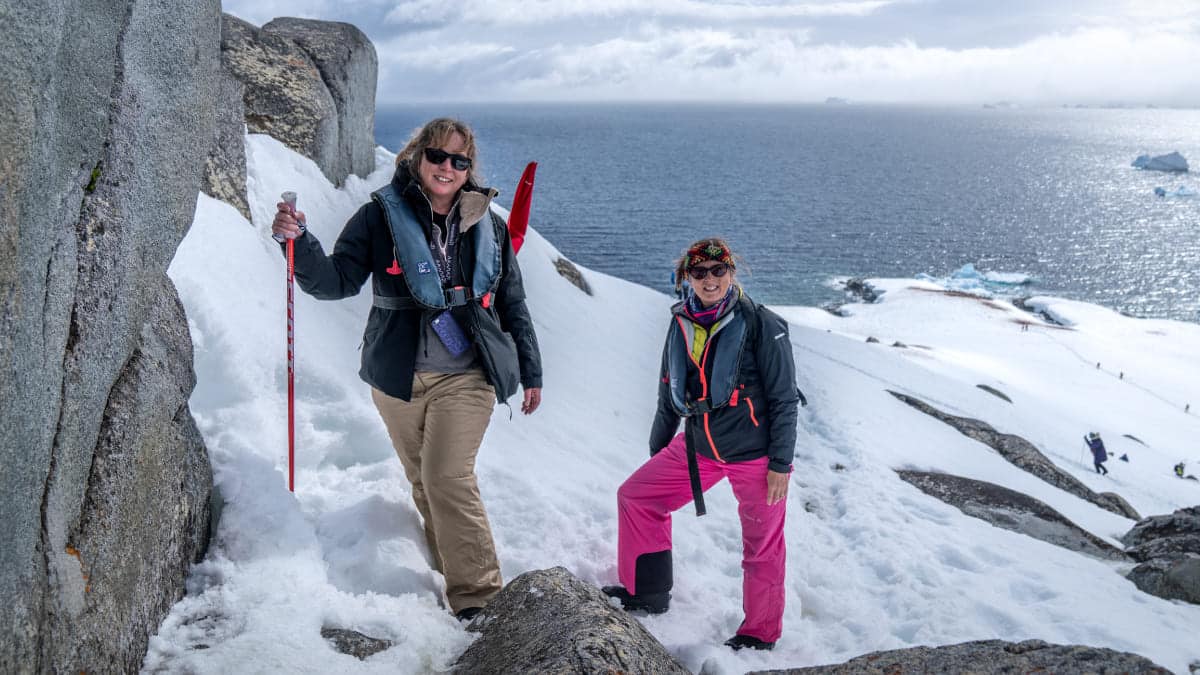
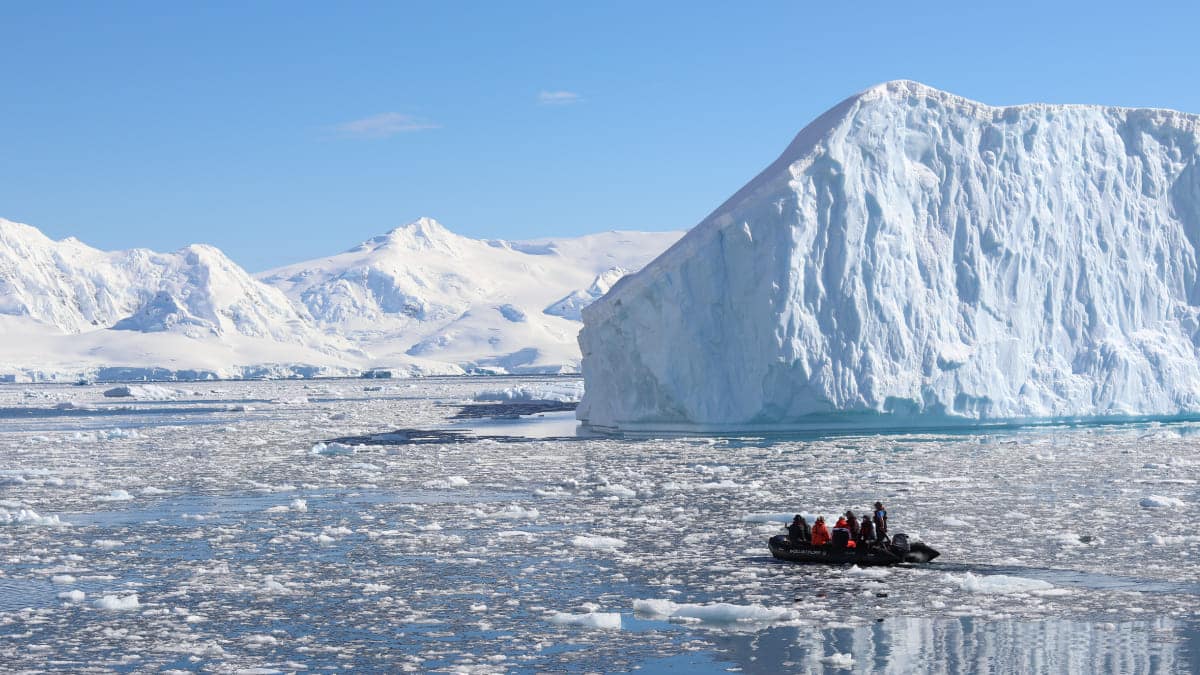
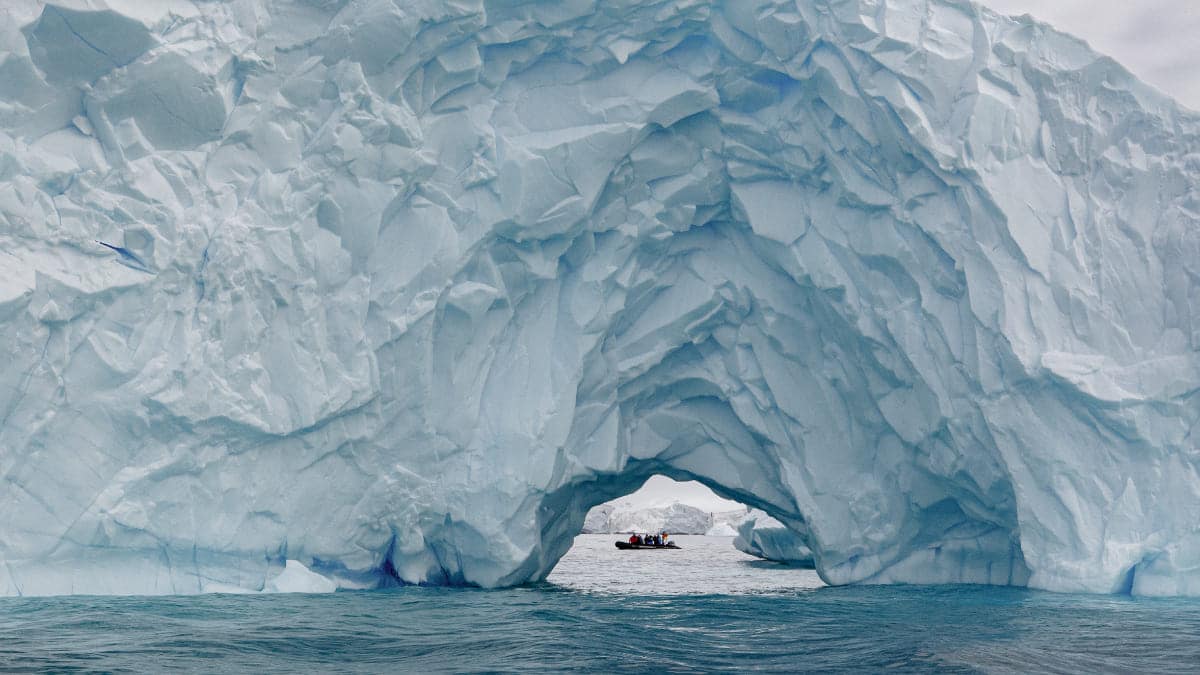
| Antarctica activities | Zodiac excursions, shore landings, wildlife viewing, photography, and expert-led interpretation |
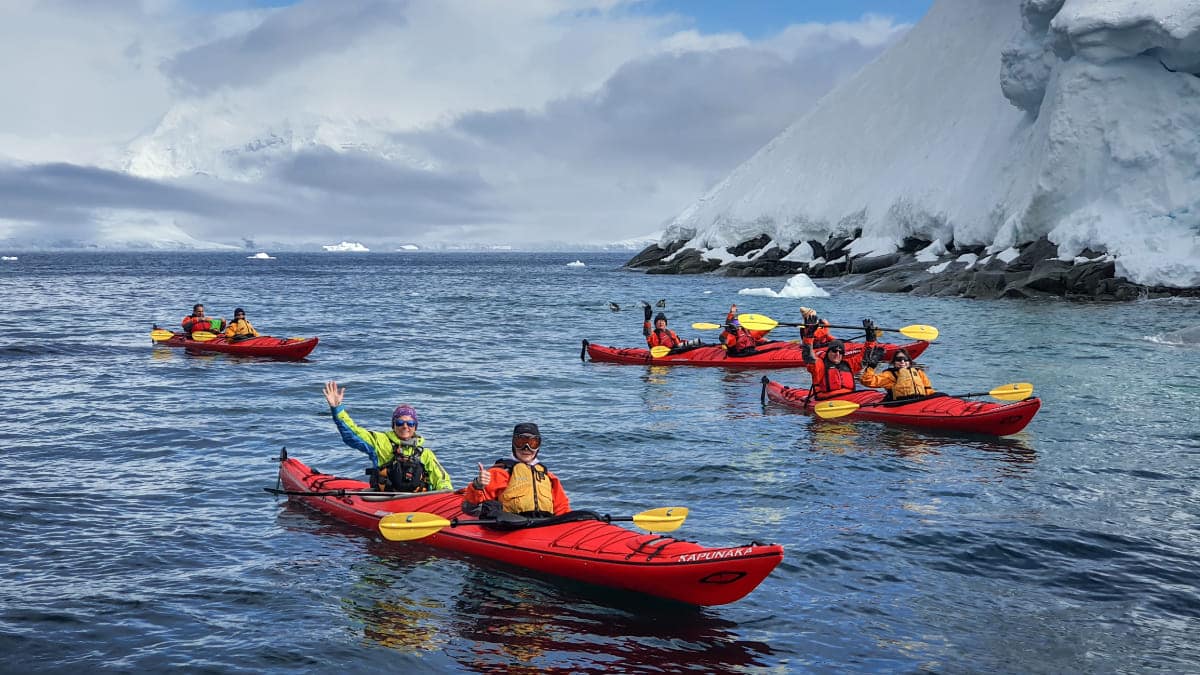
| Optional activities | May include kayaking, hiking, snowshoeing, and the polar plunge, depending on departure and conditions |
| Best suited to | Adventurous couples seeking meaningful exploration, intimate scale, and seamless planning |
| Planning support | A Quasar Specialist that will help coordinate the complete land-and-sea Journey |
Why Fly to Antarctica? Crossing the Drake Passage by Fly-Cruise
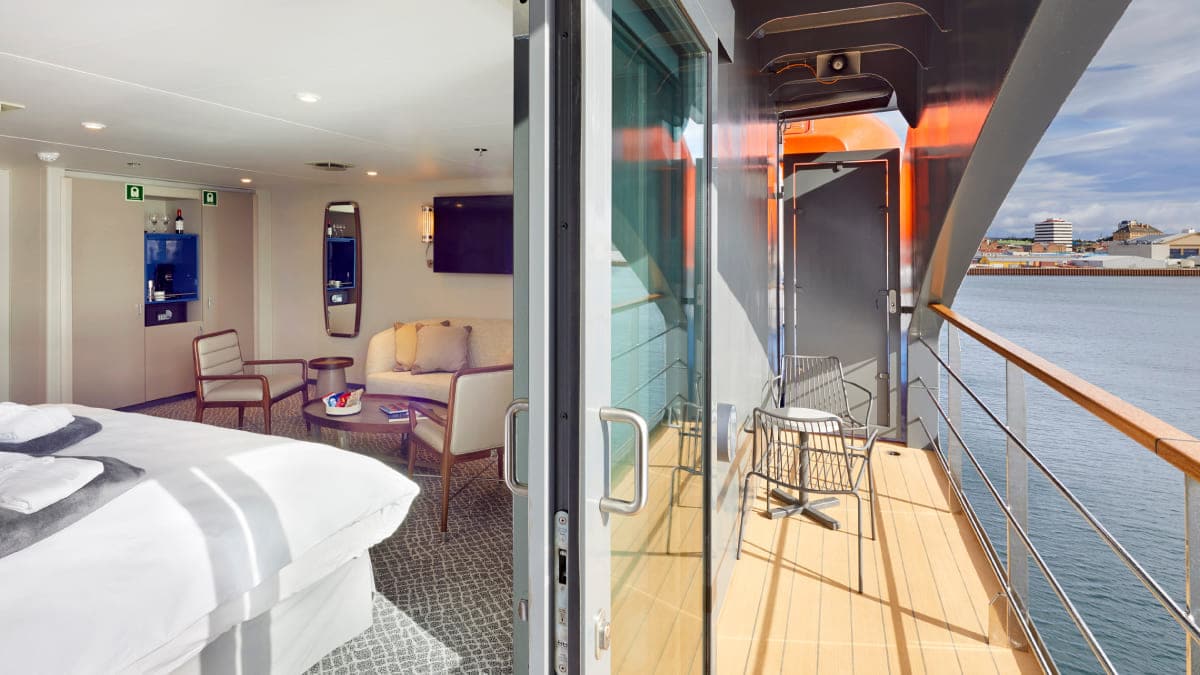
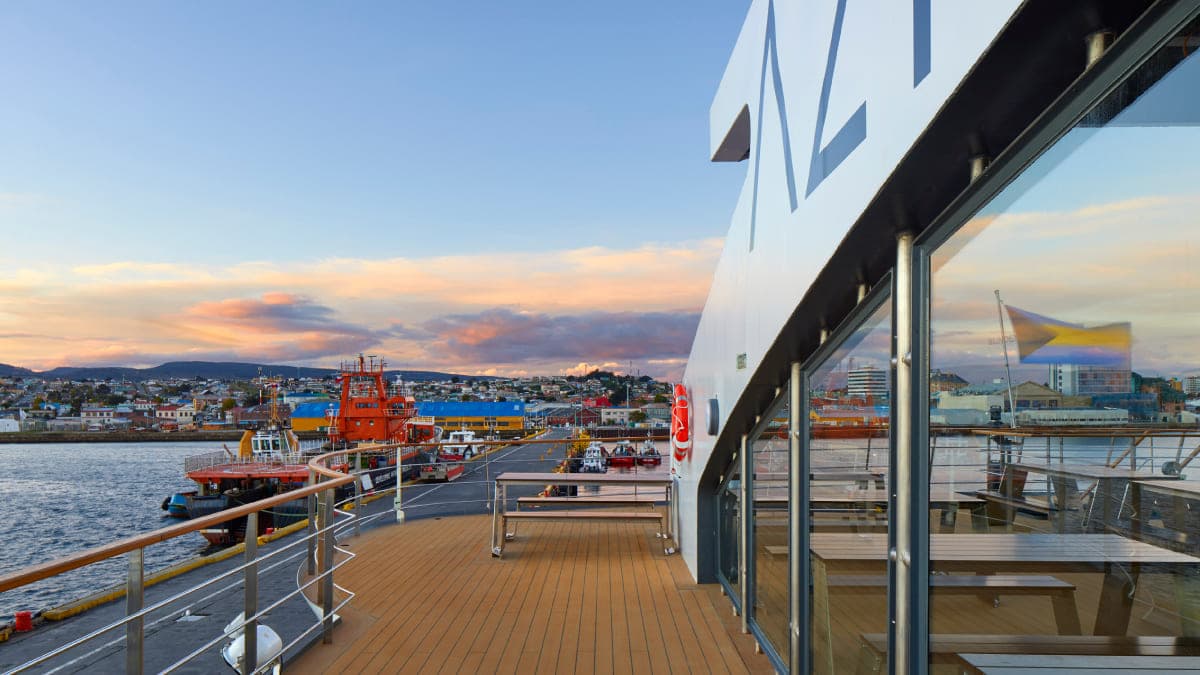
Designed specifically for Antarctica’s seas, these boutique expedition vessels offer a world-class sailing experience. On board, you’ll find comfortable cabins with private balconies, a panoramic observation lounge, sauna, gym, and experiences that bring you closer to the iconic wildlife.
Unlike larger ships carrying hundreds of passengers, these expeditions host up to 88 guests, creating a more intimate, unhurried adventure with less time waiting to disembark and more time exploring ashore.
Experience Antarctica: Earth's Final Frontier
It’s far easier and faster to get to the White Continent today than when explorers first started dogsledding toward the South Pole 200 years ago, but it remains a remarkably exclusive destination. There are few places you could go that have a shorter human history, unless you have a ride into outer space. Last year alone, Iceland hosted more than twice as many visitors as Antarctica has in the entire history of modern Antarctica tourism.
If you’ve ever wanted to see Antarctica but have held off because you’ve been short on time, we have an exciting new way to get you there faster and more comfortably than ever before. With boutique ships carrying up to 88 guests, a private expedition club to send you off in Punta Arenas, and new flight options that save four days of sea travel by flying over the choppy Drake Passage, it’s finally time to take that Antarctic cruise you’ve been dreaming of for years.
If you want to feel like you’ve stepped into another world, a world that exists entirely without you and which is unbothered by your arrival, a Quasar journey is exactly what you seek.


Your Antarctica Expedition Yacht Experience
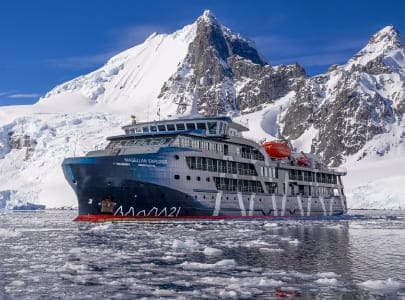
SHIP





16-Day Patagonia & Antarctica Itinerary (Sample)
| Day | Destination | Journey highlights |
|---|---|---|
| 1 | Arrive in Patagonia | Fly from Santiago to Punta Arenas or Puerto Natales, followed by a private scenic transfer to Torres del Paine |
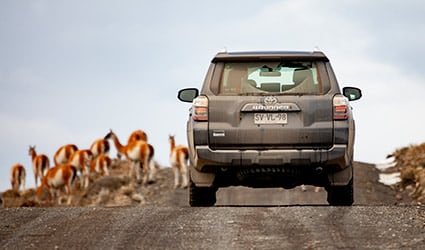
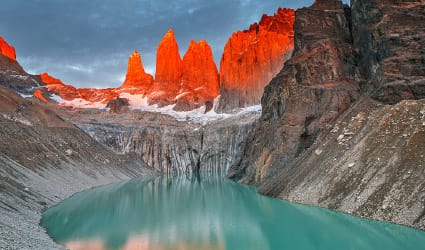
| 2–6 | Torres del Paine | Explore on a tailor-made private Safari with options including wildlife viewing, Glacier Grey, puma tracking, scenic drives, and hikes selected for your preferred pace |
| 7 | Punta Arenas | Transfer to Punta Arenas, visit Explorers House, attend the expedition briefing, meet the ground team, and receive required gear |
| 8 | Fly to Antarctica | Take the approximately two-hour charter flight to King George Island and board the expedition Yacht |
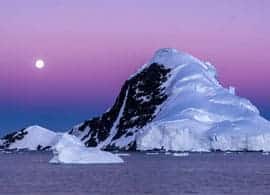
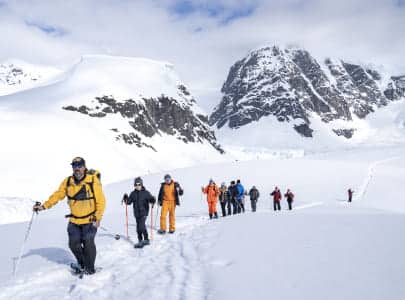
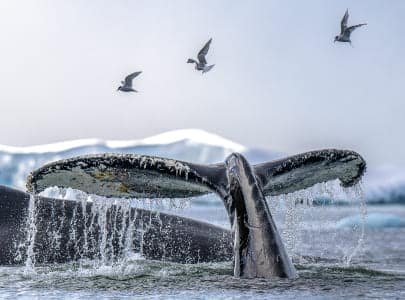
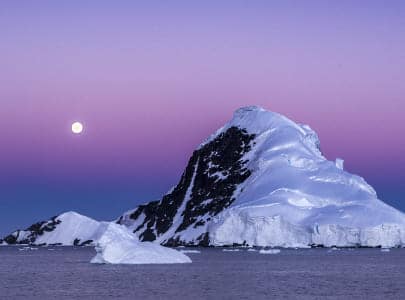
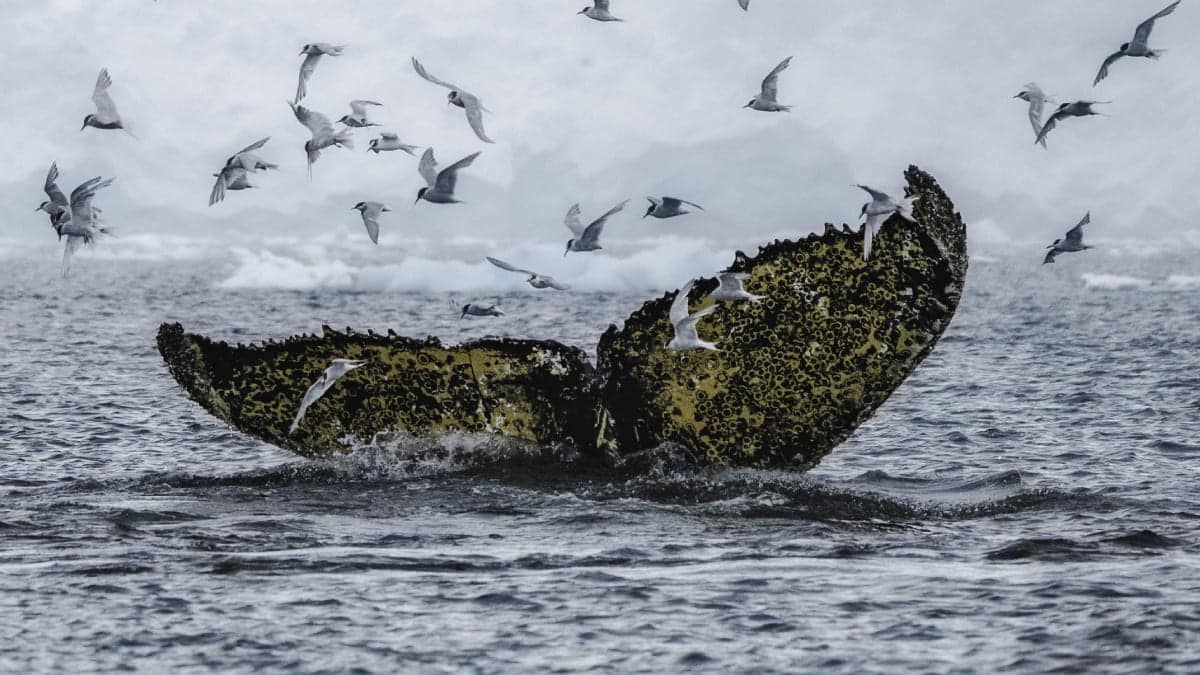
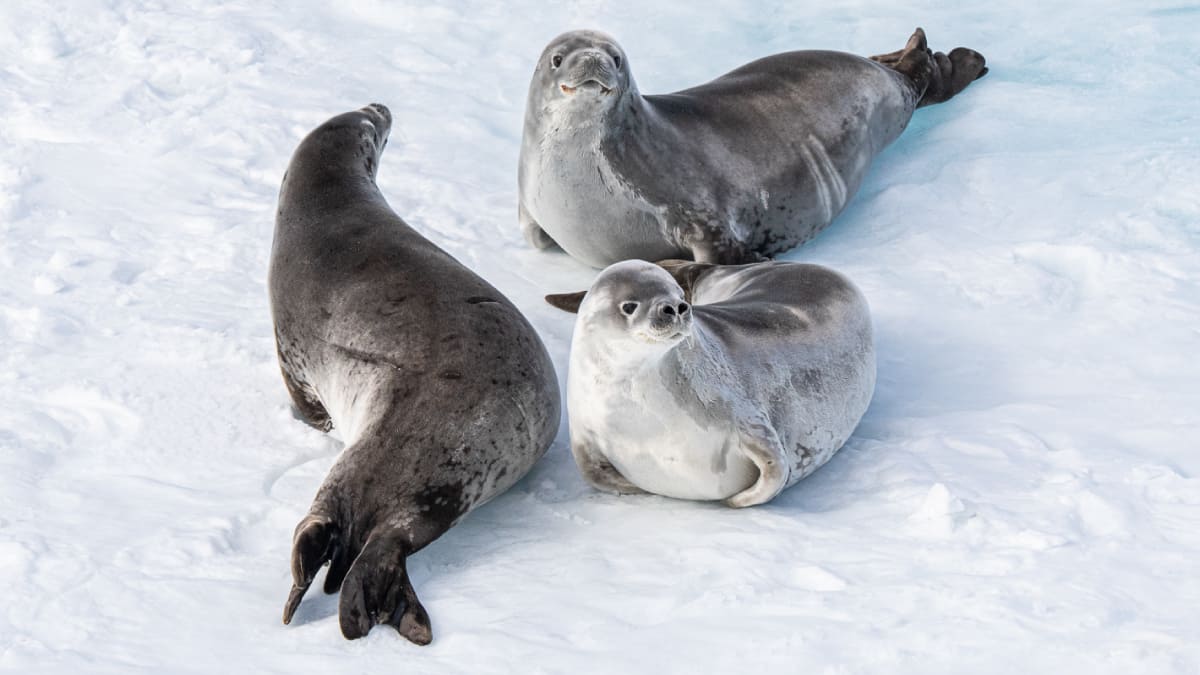
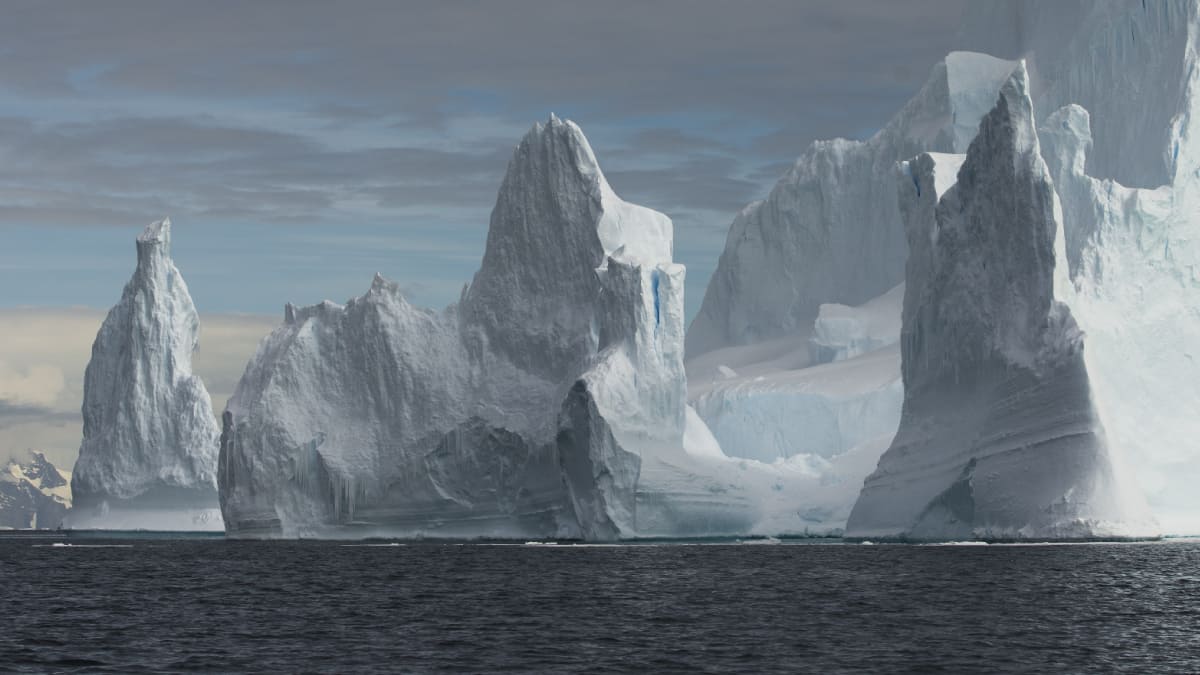
| 9–14 | Antarctic Peninsula | Explore by Zodiac and on foot with expert polar Guides; watch for penguins, whales, seals, seabirds, and extraordinary ice formations |
| 15 | Return to Punta Arenas | Disembark at King George Island, fly to Punta Arenas, and transfer to your hotel |
| 16 | Onward travel | Transfer to Punta Arenas airport after breakfast |
This sample itinerary is designed to illustrate how Patagonia and Antarctica can flow together. Exact routes, landings, wildlife sightings, and activities remain subject to departure, weather, sea, and ice conditions.
- ARRIVE IN PATAGONIA
Fly from Santiago to Punta Arenas or Puerto Natales, and enjoy a scenic private transfer to your hotel in Torres del Paine National Park.
Best Time to Visit Antarctica
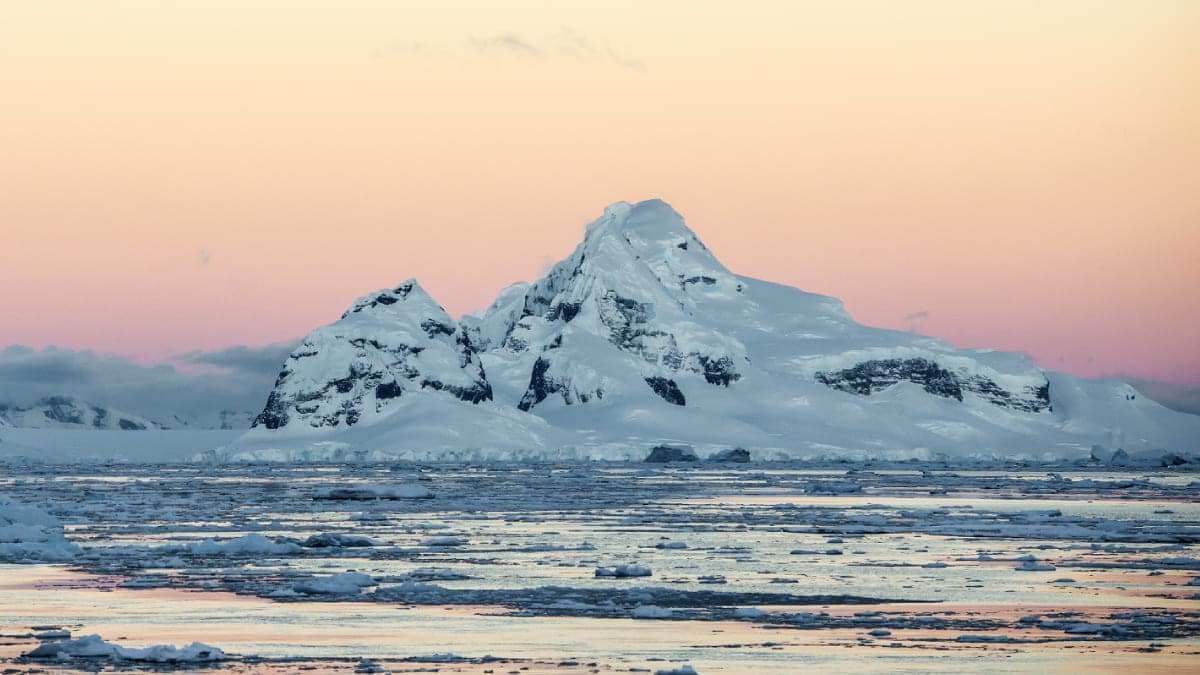
Antarctica’s expedition season runs through the austral summer, but each part of the season offers a different experience. Early departures bring pristine snow and dramatic sea ice, midsummer offers long days and active penguin colonies, while later voyages can be especially rewarding for whale watching. The best time to travel depends on what you most hope to see.
| Month | Ice and landscape | Wildlife tendencies | Patagonia pairing | Best suited to |
|---|---|---|---|---|
| November | Early-season snow and dramatic ice conditions | Courtship and nesting activity may be observed | Late spring landscapes and longer days | Photographers and Guests drawn to pristine snow |
| December | Long daylight and active breeding season | Penguin nesting and early chicks may be present | Early summer conditions in Torres del Paine | Guests seeking long exploration days |
| January | Midsummer conditions and extensive daylight | Penguin chicks and busy colonies | Peak summer exploration | First-time Guests seeking balanced conditions |
| February | Increasingly open water | Whale activity often becomes more prominent | Late-summer Patagonia | Wildlife-focused Guests |
| March | Late-season light and changing landscapes | Continued whale opportunities and more independent penguin chicks | Early autumn atmosphere | Photographers and returning polar travelers |
Wildlife sightings and environmental conditions vary by location, departure, and year and cannot be guaranteed.
Antarctica Cruise + Patagonia Safari FAQs
For the right traveler, absolutely. Antarctica is one of the most remote, wildlife-rich places on Earth, and the value comes from safe polar access, expert guidance, small-ship exploration, and the rare privilege of experiencing the White Continent. When paired with Patagonia, the Journey becomes even more powerful: two legendary wilderness frontiers in one seamless adventure.
You may feel motion in open water, especially if your itinerary sails across the Drake Passage. Some crossings are calm, while others are more active. If you’re prone to seasickness, speak with your physician before traveling, and consider a Fly the Drake itinerary to reduce time at sea.
The Drake Passage is the open stretch of ocean between South America and Antarctica. It is famous for changing sea conditions and is often considered a rite of passage for Antarctica travelers. Some Guests choose to sail it for the classic expedition experience; others prefer to fly over it. Learn more - Everything to know about the Drake Passage
Flying over the Drake Passage helps you avoid the longest open-ocean crossing and reach Antarctica more quickly. It’s a strong option for Guests with limited time, concerns about seasickness, or a preference for a smoother route. Many Fly the Drake itineraries operate between Punta Arenas, Chile and King George Island. Learn more - Sail or Fly the Drake Passage
Most Antarctica cruises include Zodiac cruising, shore landings, wildlife viewing, photography, expert talks, and time on deck watching icebergs, whales, penguins, and seabirds. Depending on your ship, itinerary, and conditions, you may also be able to kayak, snowshoe, hike, participate in citizen science, or take the polar plunge.
Wildlife varies by season and route, but many Guests hope to see penguins, seals, whales, and seabirds. Along the Antarctic Peninsula, possible sightings include gentoo, chinstrap, and Adélie penguins; humpback and minke whales; and Weddell, crabeater, leopard, and fur seals.
The best Antarctica adventure depends on your travel dates, available time, comfort with sea crossings, activity level, wildlife goals, and whether you want to add Patagonia before or after the cruise. Quasar helps you compare routes clearly so you can choose the Journey that fits your style, not just the itinerary that looks best online.
Most Antarctica cruises are active but not extreme. You should be comfortable walking on uneven, snowy, or wet terrain and stepping in and out of Zodiacs with assistance. More active options, such as kayaking, snowshoeing, or longer hikes, are usually optional.
Antarctica cruises operate during the austral summer, when conditions are more manageable for travel. You should still expect cold, wind, and changing weather. With proper layers, waterproof outerwear, gloves, warm socks, and expedition boots, most Guests feel comfortable during landings and Zodiac outings.
Antarctica can be extraordinary for families with curious older children or teens who love wildlife, science, photography, and nature. For very young children, it may not be the best fit because of cold weather, Zodiac landings, long travel days, and ship-specific age guidelines. Quasar can help your family choose the right itinerary. Learn more - Antarctica with Kids
Accolades