Written by Paul Schicke Senior Expedition Designer
Updated: April 29, 2026 Published: July 15, 2019
While the busiest times in the Galapagos are during school holidays including winter and spring breaks and summer vacation, our Quasar team loves sharing some of the amazing benefits of visiting at other times of year. Because of the unique temperate climate of the islands (which ranges between an average high of 88 to 79 F / 31 to 26 C year round), anytime is a great time to visit— and you might be rewarded with annual Galapagos wildlife events and climate conditions you’ll only find at certain times of year.
Here are 6 reasons to visit the Galapagos in March, from incredible snorkeling conditions to amazing wildlife encounters.
Temperatures for Galapagos Islands in March:
Average Low:
Average High:
Water Temperature:
Average Rainfall:
74°F / 23°C
88°F / 31°C
76°F / 24°C
2.00 inches / 5.08 cm
Key Takeaways
March is one of the warmest and sunniest months in the Galapagos - with hot temperatures, calm seas, and occasional brief tropical showers.
Wildlife activity remains rich and varied - including marine life in warm waters and seasonal nesting and courtship behaviors across the islands.
A rewarding time to visit with fewer crowds than peak holidays - offering a balance of vibrant conditions and more relaxed, immersive experiences.
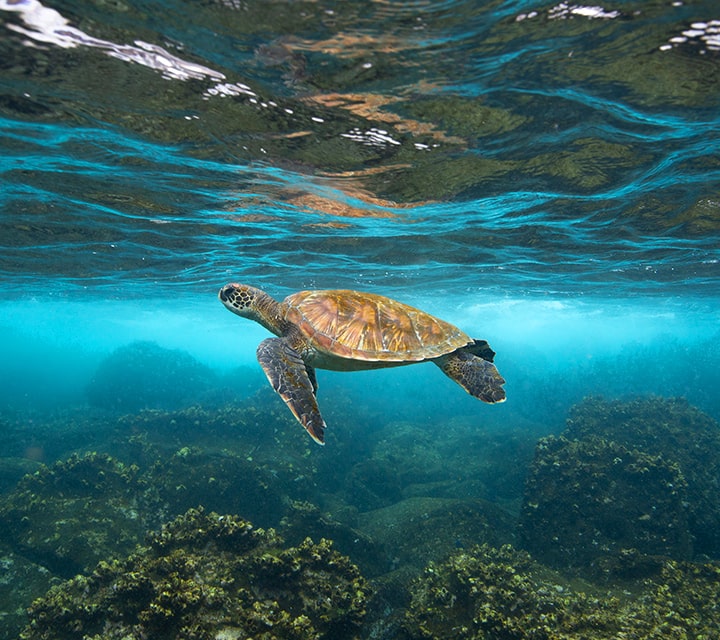
Snorkeling and diving conditions are among the best of the year - warm, clear waters offer excellent visibility and extended time in the ocean.
1. Incredible Visibility Underwater
The months of January through February bring currents of water that result in a truly distinctive trait—coastal waters around the Galapagos during these months are at the absolute clearest they’ll be all year. This means that if snorkeling in the Galapagos is your activity of choice, there’s no better place or time to do it than March in the Galapagos. However, it should be noted that waters here Galapagos are incredibly clear year-round—January through March simply sees them at their clearest.
2. Highest Water Temperature of the Year
It’s not just incredibly clarity that you’ll love about Galapagos waters in March—it’s also the warmest it will be all year. March and April represent peak water temperature for the Islands, with the water averaging 77°F (25°C). There’s nothing better than stepping into the instantly comfortable water and enjoying a laid-back snorkeling adventure. Ideal for swimming, wading around, or exploring, we can’t say enough about the gorgeous waters that occur during this season.
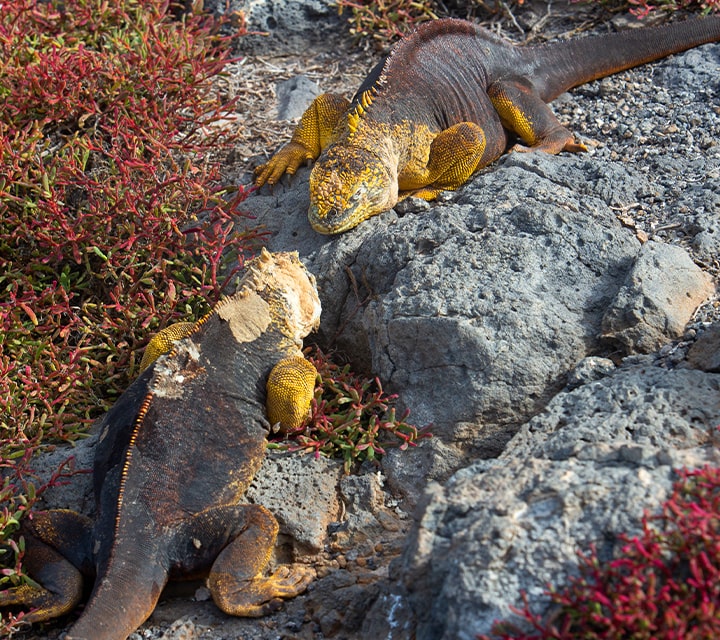
3. Land Iguanas Battle & Mate
Not all is warmth and sunshine in March. During this period, some native Island residents engage in fierce battles for supremacy and the right to partner up with females. We’re speaking, of course, about the famous land iguanas of the Galapagos.
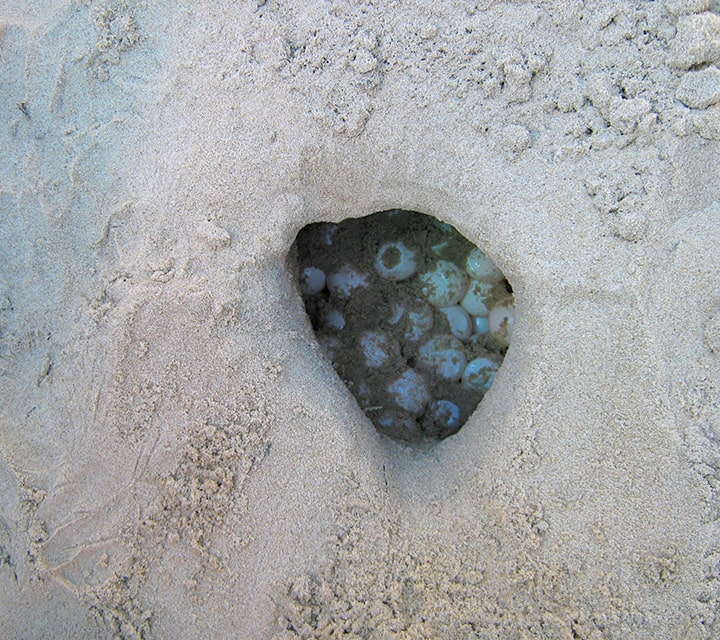
4. Nesting Green Sea Turtles
While their Iguana cousins are battling it out, Green Sea Turtles on the Galapagos are nesting peacefully and laying eggs along the coast. These beautiful beings take this time of year to find safe spaces for their eggs to lay and hatch, and eventually the tiny creatures will make their way back to the sea, where many will live for over a century.
Witnessing these nesting creatures in their natural habitat is truly special, and March marks one of the best times of year to see it happen.
When to Visit Galapagos
A COMPLETE GUIDE ON GALAPAGOS SEASONS, CLIMATE, & WILDLIFE ACTIVITY
Download our detailed month-by-month guide to discover which animals you can see and what weather to expect.
Fill out the form below and check your inbox in a few minutes.
5. Great Frigatebirds Nest on Genovesa (Tower) Island
Speaking of nesting wildlife, the Magnificent Great Frigatebird begins nesting on Genovesa Island in March. This large seabird, famous for the striking black and red feather pattern in males and the gorgeous white and black contrasts of the females, annually lands in the Galapagos to create one of its largest nesting populations on the globe. This occurs on Genovesa Island, and our Quasar expeditions allow you to get up close with these beautiful birds in their natural nesting habitat.
6. Lots of Sunny Skies
Throughout all of these adventures, you’ll enjoy sunny skies and warm weather as March brings some of the year’s clearest skies to the Galapagos. Bring your sunblock, sunglasses and a hat, and get ready to experience everything the Islands have to offer under brilliant blue skies and the bright island sun.
March is a wonderful time to experience some of the Galapagos’ incredible wildlife, marine life, and landscape. But the most wonderful thing about these treasured Islands is that any time truly a good time to visit—each time of year brings its own surprises and experiences to behold.
Hello! My name is Paul. I am photographer, traveler, teacher and writer. I have extensive experience in travel to Galapagos, Peru, Patagonia and the western seaboard of South America specializing in ways travelers can experience these once-in-a-life destinations like locals on the road. Lover of wine, chocolate, travel, coffee, and helping others plan vacations of a lifetime!
For anyone who’s read Mr. Popper’s Penguins or enjoyed watching these flightless seabirds zip around an aquarium or zoo, a trip to Antarctica might seem like the ultimate treat for curious children. Where else can you go to watch penguins slide around on ice, in nature? That said, traveling to the ends of the earth …
Machu Picchu has long captivated travelers with its remarkable history and mystical mountain setting. But as you’re planning a trip to this wonder of the world, the logistics can feel like an obstacle that stands in the way of your bucket-list adventure. How do you actually get to this remote Incan citadel? What’s the closest …
Most travelers reach Peru by flying into Lima, the country’s main international gateway. From there, domestic flights and other connections make it easy to explore destinations like Cusco, Machu Picchu, the Sacred Valley, the Amazon, and beyond. That is the practical answer. The more meaningful one is that Peru is not a destination that reveals …
Close your eyes and imagine arriving in Antarctica. Maybe you’re bundled up in layers on the deck of an expedition ship, and rewarded with the sight of white cliffs emerging from an inky sea spotted with crumbling glaciers. Or maybe you’re touching down on a remote landing strip, watching as an endless white wilderness seems …