



















Step back in time with me, Charles Darwin, to the year 1835. Imagine the wonder and curiosity as I first set foot on the Galapagos Islands during the historic voyage of the HMS Beagle. These remote islands, with their unique geology and diverse wildlife, were a naturalist's dream. Over the years, the Galapagos finches have become iconic symbols of evolutionary theory, often tied to my name. But the true story of these finches is far more sophisticated than popular legend suggests.
Key Takeaways – The Hidden Truth About Darwin’s Finches
- Darwin’s finches were not the primary inspiration for his original theory of evolution.
- Darwin’s incomplete finch records limited their usefulness during his early evolutionary research.
- Later scientists established the finches as powerful examples of adaptation and natural selection.
- Finch research reveals adaptive radiation, rapid evolution, hybridization, and genetic influences on beak variation.
The Myth of the Finches
It's a common misconception that the Galapagos finches were the primary catalyst for my theory of evolution by natural selection. In reality, during my initial observations and collections, the finches were not as significant as the narrative suggests. In fact, I didn’t even mention them in my groundbreaking work On the Origin of Species.
When I got to the Galapagos, I was amazed by the variety of life there. The finches were interesting, but I didn’t keep track of which species came from which islands, an important detail for understanding their evolutionary paths. Because of this, my finch collection wasn't as helpful in developing my theory. Instead, the mockingbirds, plants, and other animals were more useful because I had better records of them.

Discoveries and Missteps
My stay in the Galapagos was a period of intense learning and discovery, but it wasn’t perfect and errors occurred. The diverse ecosystems of these islands offered invaluable insights into the adaptability and variation of species. Although my documentation of the finches was incomplete, others aboard the Beagle meticulously recorded their collections, later aiding in the comprehensive study of these birds.
The Galapagos finches did become crucial to evolutionary biology, but this was due to the diligent work of ornithologists and other scientists who followed. They categorized the finches in great detail, and also their respective islands, leading to the robust understanding we have today.

Download our detailed month-by-month guide to discover which animals you can see and what weather to expect.
DOWNLOAD THE GUIDE
Unbelievable Facts About Darwin’s Finches
While my personal contribution to the study of the Galapagos finches may have been exaggerated, these remarkable birds have indeed provided some astonishing insights into natural selection:
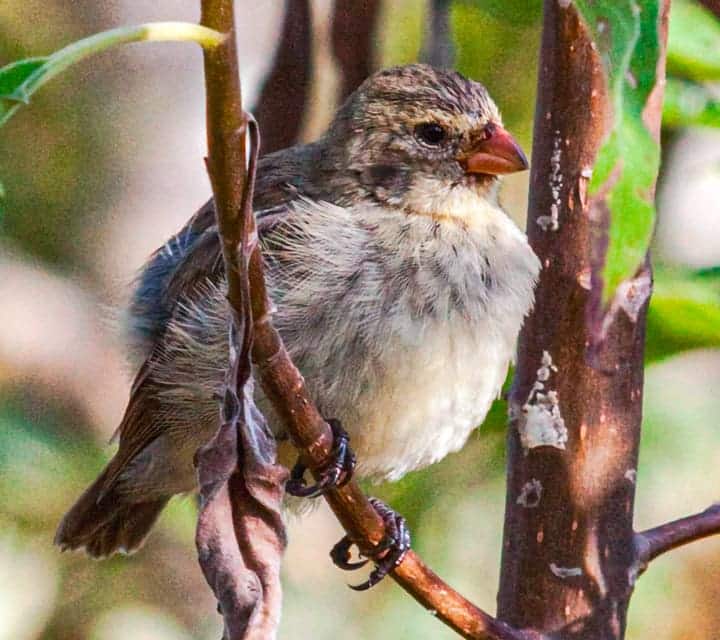
- Adaptive Radiation: The finches are a textbook example of adaptive radiation, where a single ancestor species diversified into multiple species, each adapted to different ecological niches across the islands.
- Beak Variations: The diversity in beak shapes and sizes among the finches is a direct response to the availability of different food sources. This difference lets species take advantage of different habitats., from cracking hard seeds to probing cactus flowers for nectar.
- Rapid Evolution: Studies have shown that finch populations can undergo significant evolutionary changes in relatively short periods. This rapid adaptation is often driven by environmental changes such as droughts, which affect food availability.
- Hybridization: Interestingly, hybridization among different finch species is more common than previously thought. This genetic mixing can introduce new traits into populations, contributing to their adaptability and resilience.
- Genetic Studies: Modern genetic research has identified the genes that control beak shape and size, helping us better understand how natural selection works at the genetic level.

Reflecting on a Legacy
Reflecting on my journey to the Galapagos, it's clear that while my observations and collections were crucial, they were just the beginning. The islands' unique environment and isolated ecosystems have continued to be a natural laboratory for studying evolution, inspiring generations of scientists.
The story of the Galapagos finches exemplifies the collaborative nature of scientific discovery. My initial findings laid the groundwork, but it was the cumulative efforts of many researchers that fully uncovered the finches' evolutionary significance. This ongoing research continues to reveal new insights, showcasing the dynamic and ever-evolving nature of science itself.
Darwin’s Final Thoughts
The Galapagos Islands are still a key place for scientific discovery. While the finches weren't the main focus of my original theory, they've come to symbolize natural selection and adaptation. Their story, tied to mine, highlights the value of careful observation, teamwork, and the constant search for knowledge.
As travelers and adventurers, you too can explore these extraordinary islands, witnessing firsthand the diversity and complexity that inspired my work and continues to inspire scientists today. The Galapagos offer a unique window into the natural world, where every visit can be a journey of discovery, much like mine was almost two centuries ago.
