






- Home >
- Travel Guide >
- Galapagos Travel Guide >
- When to Visit Galapagos
Galapagos Seasonality:
Is there a better or worse time to go?
The best time to visit the Galapagos is the month that best matches what you hope to see and feel. For warmer water, calmer seas, and lush island landscapes, look to December through May. For cooler walks, richer marine activity, sea lion pups, penguins, and dramatic wildlife behavior, look to June through November. There is no true off-season in the Galapagos; most iconic species are present year-round. The smarter question is not simply “What is the best month?” but “What kind of Galapagos Adventure do you want to come home talking about?”
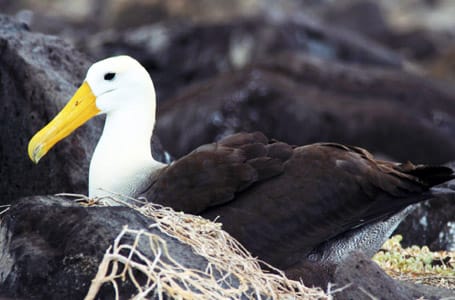
For anyone interested in visiting the islands, there is really no better or worse time to visit. In part this is because the Galapagos Islands are right on the equator so that air and water temperatures do not vary much. In addition, almost all of the animal species you will see on the Islands arrived because they floated there on logs or beds of plants, or they were blown in. This means that species like the Galapagos penguin, flightless cormorant, marine iguana, land iguana, blue footed booby, Galapagos hawk, fur sea lion, California sea lion and many others spend the entire year in the Galapagos and do not migrate. The Waved Albatross is one of the few migratory exceptions and is best seen in spring and summer.
Best Time to Visit Galapagos Based on Your Interests
The Galapagos changes subtly throughout the year, with each season offering its own mix of wildlife activity, ocean conditions, landscapes, and travel advantages. Rather than searching for a universally "best" month, the key is finding the season that best matches your interests. Whether you're dreaming of warmer-water snorkeling, active marine life, whale watching, family travel, photography, or a quieter escape for two, the guide below can help you identify the months most likely to deliver the experience you're looking for.
| If You Want... | Best Months |
|---|---|
| Warmest water | Jan-Apr |
| Best snorkeling | Sep-Nov |
| Sea lion pups | Aug-Nov |
| Penguins | May-Dec |
| Whale watching | Jul-Oct |
| Families | Jun-Aug, Dec |
| Couples | May, Sep-Nov |
| Fewer visitors | May, Sep-Nov |
| Photography | Apr-Jun, Oct-Nov |
Best Time to Visit Galapagos for Wildlife
One of the biggest advantages of visiting the Galapagos is that wildlife can be seen year-round. Unlike many destinations where animals migrate away for part of the year, many of the islands' most iconic species—including marine iguanas, giant tortoises, blue-footed boobies, and sea lions—remain in the archipelago throughout the year. However, certain months can offer particularly memorable wildlife behaviors, from sea lion pups and whale sightings to nesting seabirds and giant tortoise migrations.
| Wildlife Experience | Best Months |
|---|---|
| Waved Albatross | April – December |
| Sea Lion Pups | August – November |
| Galapagos Penguins | May – December |
| Blue-Footed Boobies | July – November |
| Giant Tortoises | Year-Round |
| Green Sea Turtles | December – May |
| Whale Watching | July – October |
Wildlife activity can vary slightly from year to year and between islands, but the guide above highlights some of the most rewarding times to experience these iconic Galapagos species.
Download our detailed month-by-month guide to discover which animals you can see and what weather to expect.
DOWNLOAD THE GUIDE
Galapagos Weather Month by Month
Looking for more detail? Click any month below to explore weather conditions, wildlife activity, water temperatures, and seasonal highlights in greater depth.
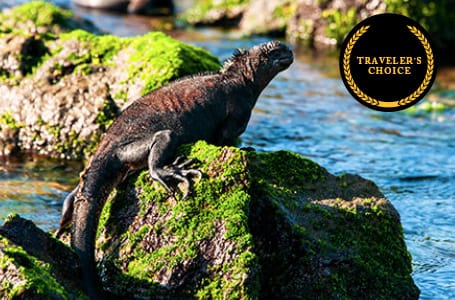
- Best month for snorkeling with penguins
- Great Underwater visibility
- Warm sunny days, with lots of hours of clear skies
- Water temperatures are some of the warmest all year
Climate conditions:
- Air Temp (Max / Min): 30 / 22°C, 86 / 72°F
- Average Rainfall: 2.5cm, 1.0in (in the highlands)
- Average Water Temperature: 24.5°C / 76°F
Animals Mating / Breeding:
- Red-footed boobies and masked boobies breeding and nesting (year-round)
- Green Sea turtles nesting
- Marine Iguanas and Land Iguanas mating
- Magnificent and Great Frigate birds nesting (year-round on North Seymour Only)
- Tortoises laying eggs (in the wild)
- Flightless Cormorants, Penguins and Greater Flamingoes breeding and nesting (year-round, depending on food supply)
------------
Special Notes:
- Best underwater visibility (along with Feb & March)
- The sun is very intense during this month. We Recommend sun-block SPF 30 or higher.
- Additional information about January in the Galapagos.
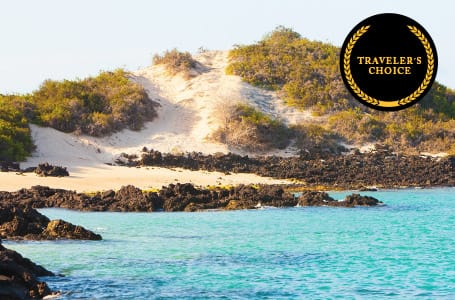
- Best Underwater visibility (along with March)
- Warm sunny days. Most hours of clear skies of any month
- Water temperatures are some of the warmest all year
- Giant tortoises are laying eggs in the wild
Climate conditions:
- Air Temp (Max / Min): 30 / 24°C, 86 / 75°F
- Average Rainfall: 2.5cm, 1.0in (in the highlands)
- Average Water Temperature: 25°C / 77°F
Animals Mating / Breeding:
- Red-footed boobies and masked boobies breeding and nesting (year-round)
- Green Sea turtles nesting
- Marine Iguanas and Land Iguanas mating
- Magnificent and Great Frigate birds nesting (year-round on North Seymour Only)
- Tortoises laying eggs (in the wild)
- Flightless Cormorants, Penguins and Greater Flamingoes breeding and nesting (year-round, depending on food supply)
------------
Special Notes:
- Best underwater visibility (along with Feb & March)
- The sun is very intense during this month. We Recommend sun-block SPF 30 or higher.
- Additional information about February in the Galapagos.
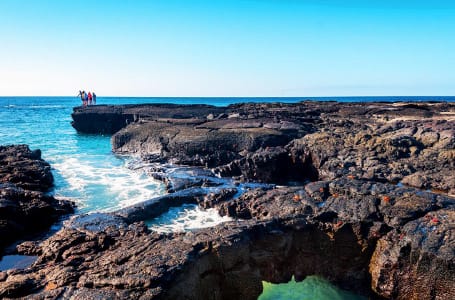
- Best Underwater visibility (along with January & February)
- Water temperature is the highest all year (along with April)
- Land Iguanas begin mating (male fighting spectacles)
- Highlands are very green and lush
Climate conditions:
- Air Temp (Max / Min): 31 / 24°C, 88 / 75°F
- Average Rainfall: 5.1cm, 2.0in (in the highlands)
- Average Water Temperature: 25°C / 77°F
Animals Mating / Breeding:
- Red-footed boobies and masked boobies breeding and nesting (year-round)
- Green Sea turtles nesting
- Marine Iguanas and Land Iguanas mating
- Magnificent and Great Frigate birds nesting (year-round on North Seymour Only)
- Great Frigate birds mating and nesting on Genovesa (Tower) Island
- Tortoises laying eggs (in the wild)
- Flightless Cormorants, Penguins and Greater Flamingoes breeding and nesting (year-round, depending on food supply)
------------
Special Notes:
- Best underwater visibility (along with Jan & Feb)
- Rainy season reaches its peak in the highlands
- Water temperature is the highest all year (until April)
- The sun is very intense during this month. We recommend sun-block SPF 30 or higher.
- Additional information about March in the Galapagos.
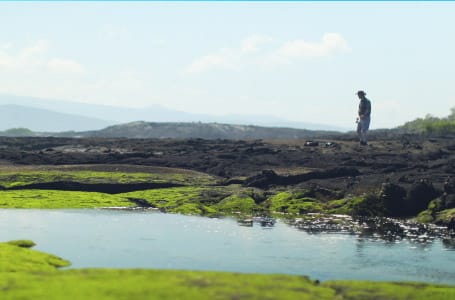
- Water temperature is the highest all year (along with March)
- Flamingos breeding and nesting (bright colors)
- Highlands are very green and lush
- Some of the clearest skies all year
Climate conditions:
- Air Temp (Max / Min): 31 / 24°C, 88 / 75°F
- Average Rainfall: 3.8cm, 1.5in (in the highlands)
- Average Water Temperature: 25°C / 77°F
Animals Mating / Breeding:
- Red-footed boobies and masked boobies breeding and nesting (year-round)
- Green sea turtles nesting
- Marine Iguanas and Land Iguanas mating
- Magnificent and Great Frigate birds nesting (year-round on North Seymour Only)
- Waved albatross begin mating and nesting
- Great Frigate birds mating and nesting on Genovesa (Tower) Island
- Tortoises laying eggs (in the wild)
- Flightless Cormorants, Penguins and Greater Flamingoes breeding and nesting (year-round, depending on food supply)
------------
Special Notes:
- Rainy season reaches its peak in the highlands
- Water temperature is the highest all year
- The sun is very intense during this month. We recommend sun-block SPF 30 or higher.
- Additional information about April in the Galapagos.
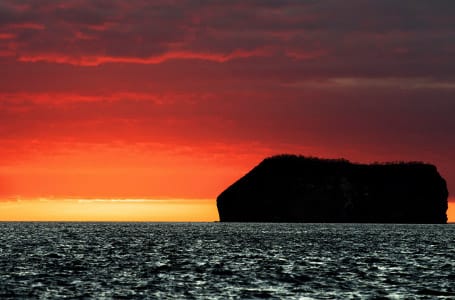
- Cooler season begins (days are not as hot)
- Most pleasant weather all year (along with June)
- Waved Albatross arrive to Galapagos and begin nesting
- Humboldt Current gets stronger (nutrient rich waters attract marine life)
Climate conditions:
- Air Temp (Max / Min): 28 / 22°C, 82 / 72°F
- Average Rainfall: 1.9cm, 0.75in (in the highlands)
- Average Water Temperature: 24.5°C / 76°F
Animals Mating / Breeding:
- Red-footed boobies and masked boobies breeding and nesting (year-round)
- Green Sea turtles nesting
- Marine Iguanas and Land Iguanas mating
- Waved albatross nesting
- Magnificent and Great Frigate birds nesting (year-round on North Seymour Only)
- Great Frigate birds mating and nesting on Genovesa (Tower) Island
- Tortoises laying eggs (in the wild)
- Flightless Cormorants, Penguins and Greater Flamingoes breeding and nesting (year-round, depending on food supply)
------------
Special Notes:
- Beginning of the Garua season (cool dry season - until December)
- Along with the month of June, this month offers the most pleasant weather. The intense hot climate of the earlier months begins to cool off, but there are still plenty of hours of clear skies.
- Additional information about May in the Galapagos.
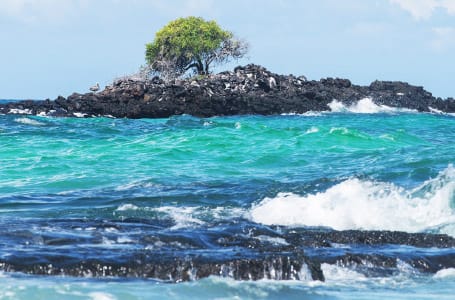
- Most pleasant weather all year (along with May)
- Flightless Cormorants start nesting (depending on food supply)
- Stronger Humboldt Current makes marine life active (great for snorkeling)
- Little rainfall in the highlands
Climate conditions:
- Air Temp (Max / Min): 26 / 21°C, 79 / 70°F
- Average Rainfall: 0.6cm, 0.25in (in the highlands)
- Average Water Temperature: 23°C / 73°F
Animals Mating / Breeding:
- Red-footed boobies and masked boobies breeding and nesting (year-round)
- Waved albatross nesting
- Marine Iguanas and Land Iguanas mating
- Magnificent and Great Frigate birds nesting (year-round on North Seymour Only)
- Flightless Cormorants, Penguins and Greater Flamingoes breeding and nesting (year-round, depending on food supply)
------------
Special Notes:
- Beginning of the Garua season (cool dry season - until December)
- Along with the month of May, this month offers the most pleasant weather. The intense hot climate of the earlier months begins to cool off, but there are still plenty of hours of clear skies.
- Additional information about June in the Galapagos.
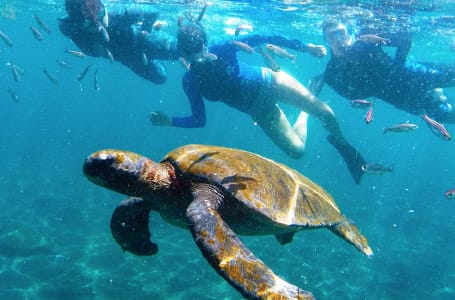
- California Sea Lions start breeding (sea lion pups throughout the islands)
- Stronger Humboldt Current makes marine life active (great for snorkeling)
- Red Footed Boobies begin nesting
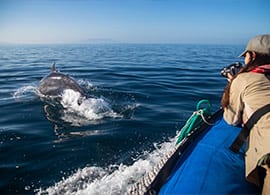
- Whale and dolphin spotting becomes more common
Climate conditions:
- Air Temp (Max / Min): 26 / 20°C, 79 / 68°F
- Average Rainfall: 1.3cm, 0.50in (in the highlands)
- Average Water Temperature: 22°C / 72°F
Animals Mating / Breeding:
- Blue-footed boobies begin nesting
- Red-footed boobies and masked boobies breeding and nesting (year-round)
- Waved albatross nesting
- Magnificent and Great Frigate birds nesting (year-round on North Seymour Only)
- Start of California sea lion breeding season
- Flightless Cormorants, Penguins and Greater Flamingoes breeding and nesting (year-round, depending on food supply)
------------
Special Notes:
- The presence of the Humboldt Current begins to strengthen, making nutrients in the water more abundant and marine life more active. Snorkeling is great during this period.
- Dolphin and Whale spotting, particularly on our crossing to Fernandina Island, becomes more common.
- Along with the month of August, this month has more pronounced winds. However, winds in Galapagos never get too strong, as compared to other destinations like the Caribbean.
- Additional information about July in the Galapagos.
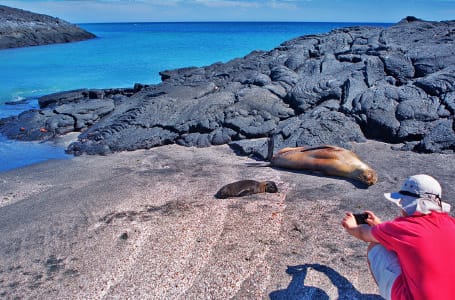
- Blue Footed Boobies mating and nesting (dancing rituals)
- Stronger Humboldt Current makes marine life active (great for snorkeling)
- Whale and dolphin spotting is more common throughout the islands
- California Sea Lions begin breeding
Climate conditions:
- Air Temp (Max / Min): 26 / 19°C, 79 / 66°F
- Average Rainfall: 0.6cm, 0.25in (in the highlands)
- Average Water Temperature: 21.5°C / 71°F
Animals Mating / Breeding:
- Blue-footed boobies nesting
- Red-footed boobies and masked boobies breeding and nesting (year-round)
- Waved albatross nesting
- Magnificent and Great Frigate birds nesting (year-round on North Seymour Only)
- California sea lions breeding
- Fur Sea lions begin breeding
- Tortoises (in Santa Cruz Island only) lay eggs in the wild)
- Flightless Cormorants, Penguins and Greater Flamingoes breeding and nesting (year-round, depending on food supply)
------------
Special Notes:
- The presence of the Humboldt Current begins to strengthen, making nutrients in the water more abundant and marine life more active. Snorkeling is great during this period.
- Dolphin and Whale spotting, particularly on our crossing to Fernandina Island, becomes more common.
- Along with the month of July, this month has more pronounced winds. However, winds in Galapagos never get too strong, as compared to other destinations like the Caribbean.
- Additional information about August in the Galapagos.
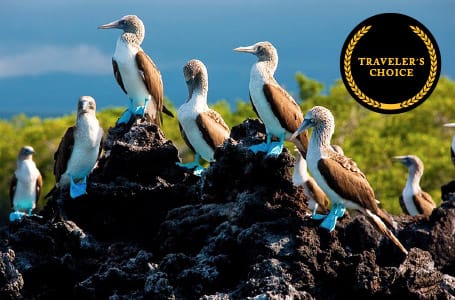
- Whale and dolphin watching is at its best (along with October)
- Frigate birds start mating (beautiful displays)
- Best Snorkeling all year (along with October)
- California Sea Lions in full breeding (lots of sea lion pups)
Climate conditions:
- Air Temp (Max / Min): 26 / 19°C, 79 / 66°F
- Average Rainfall: 2.5cm, 1.3cm, 0.50in (in the highlands)
- Average Water Temperature: 22°C / 72°F
Animals Mating / Breeding:
- Blue-footed boobies nesting
- Red-footed boobies and masked boobies breeding and nesting (year-round)
- Waved albatross nesting
- Magnificent and Great Frigate birds nesting (year-round on North Seymour Only)
- California sea lions breeding
- Fur Sea lions breeding
- Flightless Cormorants, Penguins and Greater Flamingoes breeding and nesting (year-round, depending on food supply)
------------
Special Notes:
- The presence of the Humboldt Current is strong, making nutrients in the water more abundant and marine life more active. Snorkeling is excellent during this month and swimming with sea-lion pups is very common.
- Dolphin and Whale spotting, particularly on our crossing to Fernandina Island, is very common.
- Winds are still pronounced during this month.
- Additional information about September in the Galapagos.
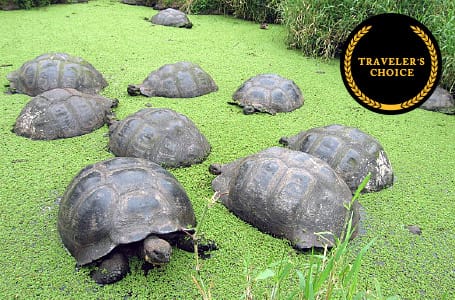
- Whale and dolphin watching is at its best (along with Sept)
- Giant Tortoises are laying eggs in the wild
- Best Snorkeling all year (along with October)
- Fur Sea Lions are breeding (lots of fur sea lion pups)
Climate conditions:
- Air Temp (Max / Min): 26 / 20°C, 79 / 68°F
- Average Rainfall: 0.6cm, 0.25in (in the highlands)
- Average Water Temperature: 22.5°C / 73°F
Animals Mating / Breeding:
- Blue-footed boobies nesting
- Red-footed boobies and masked boobies breeding and nesting (year-round)
- Waved albatross nesting
- Magnificent and Great Frigate birds nesting (year-round on North Seymour Only)
- California sea lions breeding
- Fur Sea lions breeding
- Tortoises (in Santa Cruz Island only) lay eggs in the wild
- Flightless Cormorants, Penguins and Greater Flamingoes breeding and nesting (year-round, depending on food supply)
------------
Special Notes:
- The presence of the Humboldt Current continues to be strong, making nutrients in the water more abundant and marine life more active. Snorkeling is great during this period and swimming with sea-lion pups is very common.
- Dolphin and Whale spotting, particularly on our crossing to Fernandina Island, is very common.
- Winds are still pronounced during this month.
- Additional information about October in the Galapagos.
- Green sea turtles begin mating
- Whale and dolphin watching still great
- Active marine life and great snorkeling
- Days start to get warmer
Climate conditions:
- Air Temp (Max / Min): 26 / 21°C, 79 / 70°F
- Average Rainfall: 1.3cm, 0.50in (in the highlands)
- Average Water Temperature: 23°C / 73°F
Animals Mating / Breeding:
- Blue-footed boobies nesting
- Red-footed boobies and masked boobies breeding and nesting (year-round)
- Waved albatross nesting
- Magnificent and Great Frigate birds nesting (year-round on North Seymour Only)
- Green Sea turtles begin mating
- California sea lions breeding
- Fur Sea lions breeding
- Flightless Cormorants, Penguins and Greater Flamingoes breeding and nesting (year-round, depending on food supply)
------------
Special Notes:
- The presence of the Humboldt Current is strong, making nutrients in the water more abundant and marine life more active. Snorkeling is very good during this month and amazing marine encounters are very common.
- Dolphin and Whale spotting is very common in the Bolivar Channel crossing on our way to Fernandina Island.
- Winds are still present during this month.
- Additional information about November in the Galapagos.
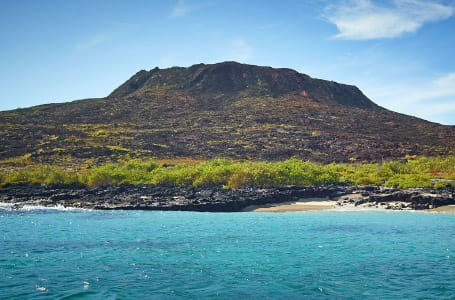
- Official start of the warm season (days get warmer)
- Humboldt Current loses strength (waters get warmer)
- More clear skies
- Masked Boobies begin nesting
Climate conditions:
- Air Temp (Max / Min): 27 / 22°C, 81 / 72°F
- Average Rainfall: 1.3cm, 0.50in (in the highlands)
- Average Water Temperature: 22.5°C / 73°F
Animals Mating / Breeding:
- Blue-footed boobies nesting
- Red-footed boobies and masked boobies breeding and nesting (year-round)
- Waved albatross nesting
- Magnificent and Great Frigate birds nesting (year-round on North Seymour Only)
- Green sea turtles begin mating
- Marine Iguanas and Land Iguanas begin mating
- California sea lions breeding
- Fur Sea lions breeding
- Flightless Cormorants, Penguins and Greater Flamingoes breeding and nesting (year-round, depending on food supply)
------------
Special Notes:
- This month marks the start of the warm season in Galapagos and the Humboldt Current loses strength. There are plenty of hours of clear skies.
- This is the start and the end of the breeding and mating seasons for many animals in Galapagos, making wildlife encounters very attractive.
- The sun starts to get more intense during this month. We recommend guests to use sun-block SPF 30 or higher, at least for the first few days.
- Additional information about December in the Galapagos.
Activities & Advantages by Month
The Galapagos is one of the few destinations where wildlife encounters, snorkeling conditions, photography opportunities, and outdoor exploration remain exceptional throughout the year. Rather than asking whether there is a "best" month to visit, it is often more helpful to consider which experiences matter most to you.
Travelers who prioritize warmer water, calmer seas, and comfortable snorkeling conditions often prefer the warmer season between December and May. Those interested in active marine life, whale watching, sea lion pups, and some of the archipelago's most exciting underwater encounters frequently gravitate toward the cooler season from June through November, when nutrient-rich ocean currents attract an abundance of wildlife.
Photographers will find unique advantages year-round. The warmer months bring greener landscapes, dramatic cloud formations, and vibrant colors, while the cooler months often showcase dynamic wildlife behavior, active seabird colonies, and spectacular marine encounters. Families often plan around school holidays in summer, spring break, and the festive season, while couples with more flexible schedules may enjoy quieter travel periods in May, September, October, November, and early December.
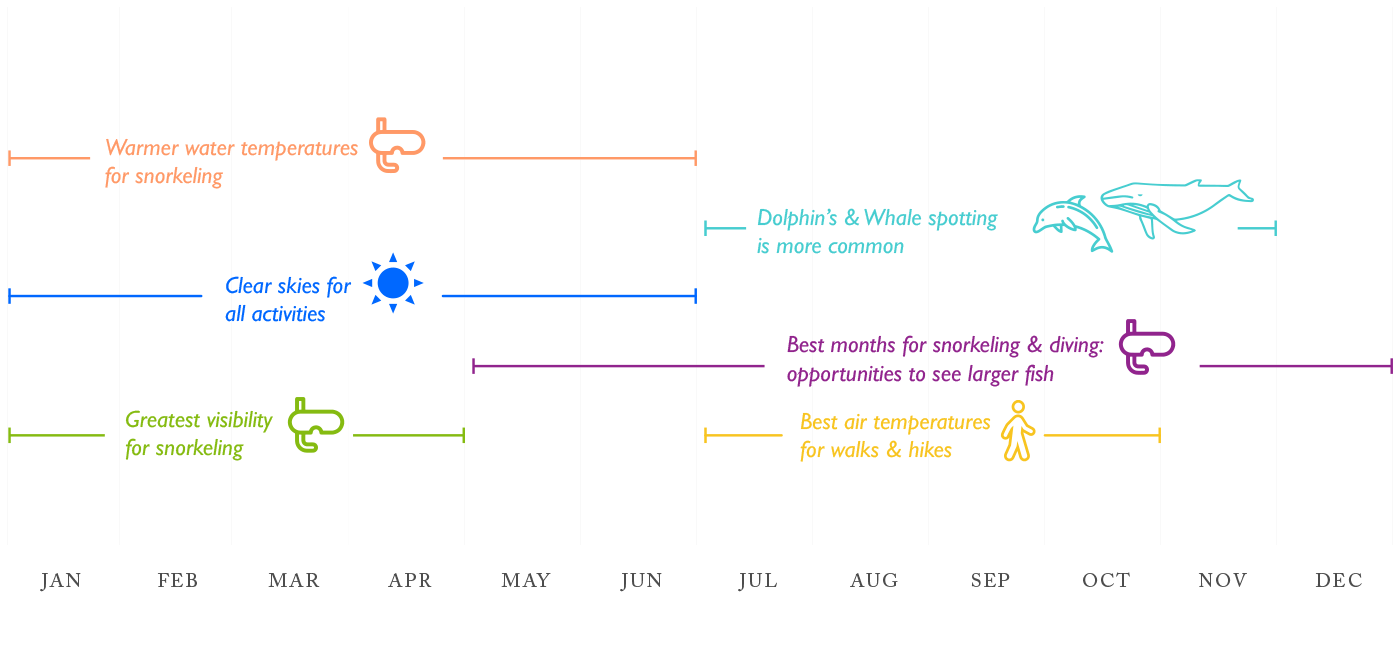
The chart below highlights some of the best times for specific wildlife encounters, activities, and seasonal advantages. Use it as a guide to identify the months that best align with the kind of Galapagos Adventure you want to experience—whether that means snorkeling with playful sea lions, photographing rare wildlife, spotting whales and dolphins, or simply enjoying the islands at their own natural rhythm.
(swipe to view)
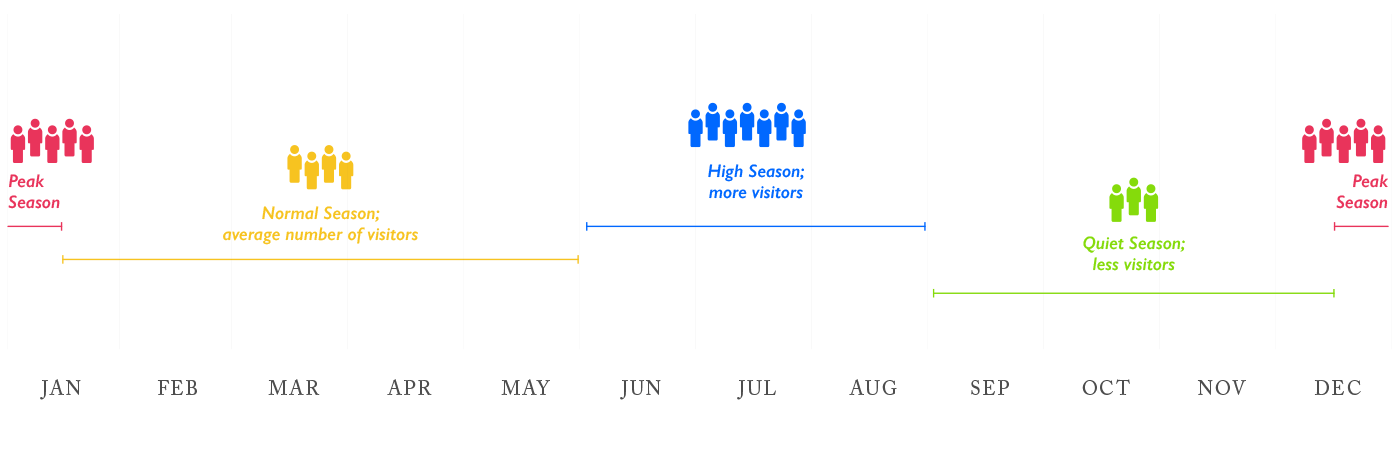
Galapagos Visitor Seasonality
Visitor numbers in the Galapagos tend to rise and fall with school holidays, festive travel periods, and international vacation calendars. This is why June through August and late December into early January often feel more in demand, especially for families planning around school breaks.
For travelers with more flexibility, quieter windows such as May, September, October, November, and early December can offer a more spacious rhythm. These months are especially appealing for Guests who want the islands to feel intimate, unhurried, and less shaped by peak travel patterns.
That said, seasonality in Galapagos is not only about the number of visitors. The size of your yacht, the timing of your landings, the quality of your Naturalist Guide, and the way each day is planned all shape how personal the experience feels. On a safari-style Galapagos Adventure, the goal is not simply to avoid crowds—it is to be in the right place, at the right time, with nature leading the way.
(swipe to view)
Galapagos Rainfall & Hours of Clear Skies
One of the most common misconceptions about the Galapagos is that there is a "good weather season" and a "bad weather season." In reality, the islands experience two distinct climate patterns, each offering different advantages for wildlife viewing, snorkeling, photography, and exploration.
From December through May, warmer temperatures, calmer seas, and more hours of sunshine create ideal conditions for Guests who enjoy swimming, snorkeling, and lush green landscapes. Brief tropical showers are common during this period, but they are often followed by sunshine and rarely impact daily excursions.
From June through November, cooler ocean currents influence the islands. Temperatures remain pleasant year-round, but skies can be cloudier and the highlands may experience periods of mist known locally as garúa. Many experienced Galapagos travelers actually prefer these months because cooler waters bring nutrient-rich currents that support some of the archipelago's most exciting marine wildlife activity.
The chart below illustrates how rainfall and hours of clear skies change throughout the year. While weather patterns vary from month to month, the Galapagos remains one of the few wildlife destinations in the world where there is truly no bad time to visit—only different ways to experience the islands.

(swipe to view)
Does Rain Affect Your Galapagos Experience?
Unlike many tropical destinations, rainfall in the Galapagos rarely disrupts exploration. Most excursions continue as planned, and many Guests are surprised by how brief showers can be. In fact, some of the islands' most beautiful conditions occur shortly after rain, when volcanic landscapes turn green and wildlife becomes especially active.
Best Time to Visit Galapagos for Snorkeling & Underwater Visibility
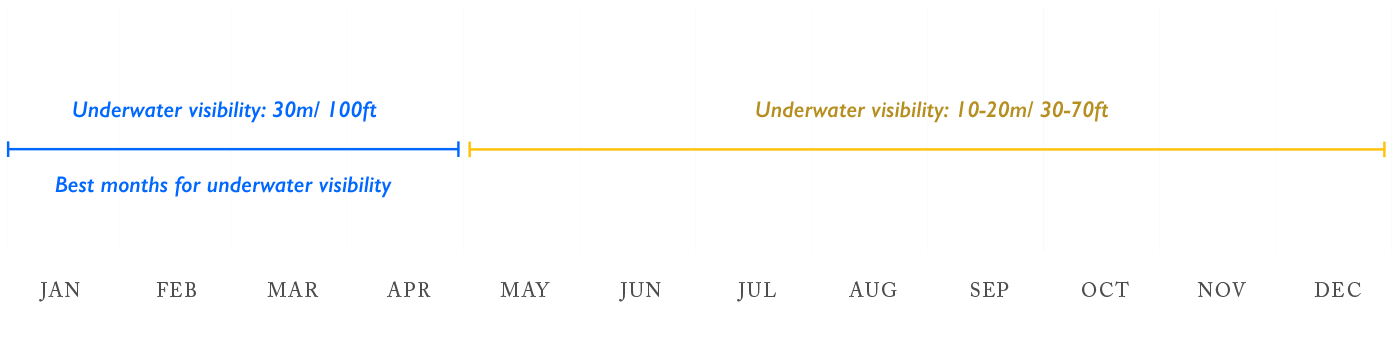
The best snorkeling month depends on what you value most. December through May usually brings warmer water and calmer seas, which many first-time snorkelers appreciate. June through November can feel cooler, but nutrient-rich currents often make the underwater world feel especially alive. On a Quasar yacht, your Naturalist Guide helps you understand not just what you are seeing, but why it is happening. Want to learn more about where and when to snorkel? Explore our complete guide to Snorkeling in the Galapagos Islands.
(swipe to view)
Common Questions About When to Visit Galapagos
There is no single best month to visit the Galapagos. December through May is often best for warmer water, calmer seas, and lush landscapes. June through November is often better for cooler walks, marine activity, sea lion pups, penguins, and dramatic wildlife behavior.
No. The Galapagos is a year-round wildlife destination. Most iconic species are present throughout the year, although some behaviors and migratory species, such as waved albatross, are seasonal.
September is often one of the quietest months, based on recent official visitor data. May, October, November, and early December can also be appealing for flexible travelers seeking a more spacious feel.
December through May is often best for warmer water and calmer snorkeling conditions. June through November can be cooler, but the nutrient-rich water can make marine life especially active.
Families often travel during June, July, August, late December, or spring break because of school calendars. These periods should be booked earlier. Families with flexible schedules may also enjoy March, April, May, October, or November. Learn more - Galapagos Family Cruises
Couples with flexible schedules may especially enjoy May, September, October, November, and early December. These months can offer a quieter rhythm, strong wildlife, and a more intimate feeling. Learn more - Galapagos Cruises for Couples