















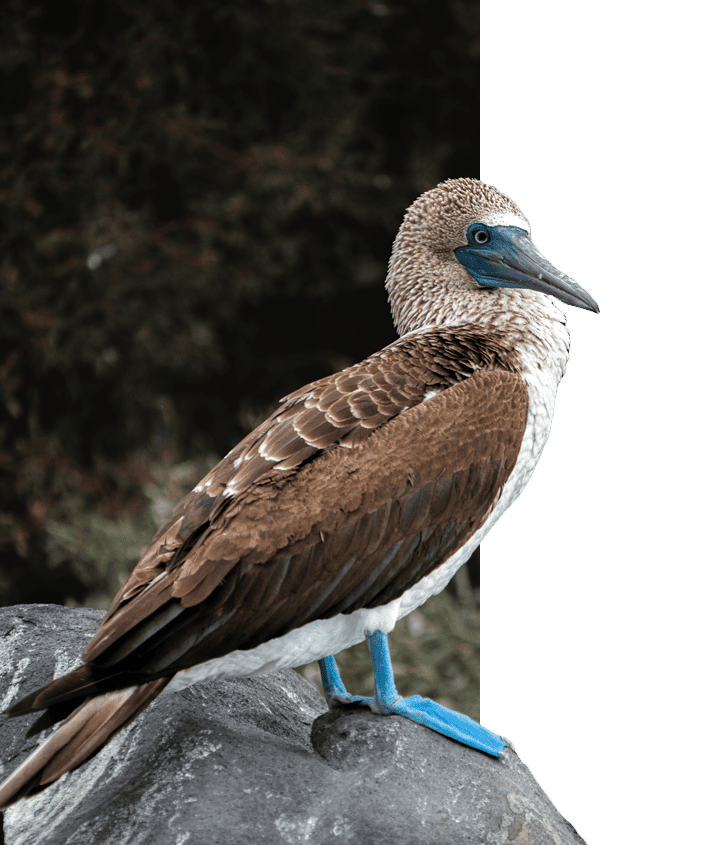
In the heart of the Pacific Ocean lies an archipelago that would forever change our understanding of life on Earth. The Galapagos Islands, with their unique and diverse ecosystems, became the origin of one of the most profound scientific theories ever conceived. It was here, in 1835, that a young naturalist named Charles Darwin embarked on a journey of discovery that would materialize in his groundbreaking work, "On the Origin of Species." This is the story of Darwin’s observations in the Galapagos and how they led to his Theory of Evolution by natural selection.
Key Takeaways – Darwin’s Theory of Evolution in the Galapagos
- Darwin’s 1835 Galapagos observations helped shape his ideas about evolution and species adaptation.
- Differences among finches and tortoises revealed how species can adapt to distinct environments.
- Darwin later identified natural selection as the mechanism driving evolutionary change across generations.
- “On the Origin of Species” established natural selection as a foundation of evolutionary biology.
A Journey Begins
My name is Charles Darwin. I first set foot on the Galapagos Islands in 1835 during the Voyage of the HMS Beagle. This expedition, lasting five years, took me around the world, but it was the Galapagos that provided the most significant insights. As I passed through the islands, I meticulously documented the flora and fauna, intrigued by the variations in species from one island to another. These observations were the seeds of a theory that would later revolutionize biology.
In reflecting on my journey and the development of the Theory of Evolution, I am reminded of the profound interconnectedness of all life. The Galapagos Islands, with their unique and diverse ecosystems, were the key to unlocking the secrets of speciation. My observations during the voyage of the Beagle laid the groundwork for a theory that has forever changed our understanding of life on Earth.
As you embark on your own explorations of the Galapagos, may you be inspired by the wonder and curiosity that drove my discoveries. The story of evolution is not just a tale of the past but a continuing saga that unfolds with each new observation and discovery. Embrace the adventure, and let the spirit of exploration guide you to new insights and deeper connections with the natural world.
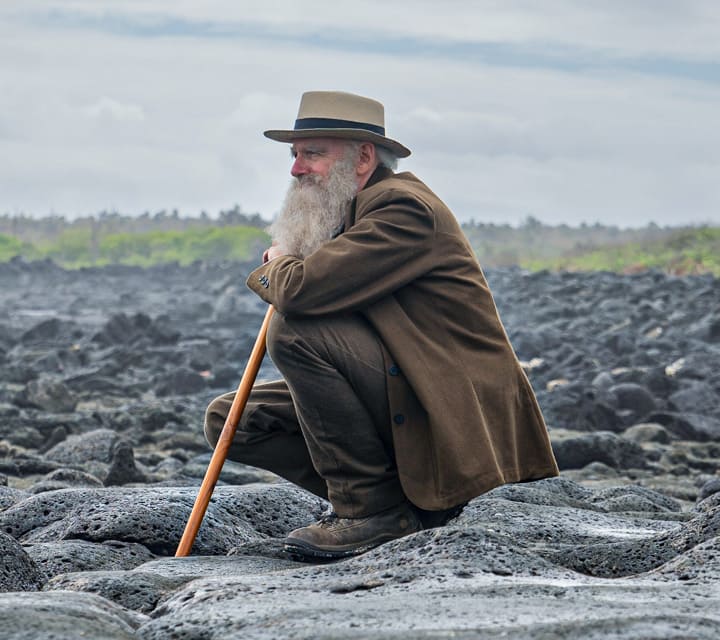
Observations in the Galapagos
The Galapagos Islands are a living laboratory of evolution. I observed that Galapagos Finches, though similar, had beaks of varying shapes and sizes depending on the island they inhabited. These differences seemed to be adaptations to the specific diets available on their respective locations. For instance, finches with strong, large beaks could crack open tough seeds, while those with slender beaks were skillful at catching insects.
Similarly, I noted variations in the shell shapes of Giant Tortoises, which appeared to correlate with the types of available vegetation. On islands with high vegetation, tortoises had saddle-shaped shells allowing them to extend their necks higher, whereas those on islands with low vegetation had dome-shaped shells.
These patterns suggested that species were not immutable but adapted to their environments. However, I was not immediately convinced of the mechanism driving these changes.

- Guarantee The Perfect Adventure
- Avoid The Crowds
- Choose The Right Yacht For You
How Animals Change Over Time
Upon returning to England, I continued to reflect on the implications of my Galapagos observations. It wasn’t until 1838, after reading Thomas Malthus’s "An Essay on the Principle of Population," that the pieces began to fit together. Malthus’s ideas on human population dynamics, particularly the struggle for resources, resonated with what I had observed in nature. I realized that the same competition for survival occurred among animals and plants.
Natural Selection: The Mechanism of Evolution
From Malthus’s work, I deduced that in nature, more individuals are born than can possibly survive. This leads to a struggle for existence, where only those best adapted to their environments survive and reproduce. Over generations, these advantageous traits become more common within a population, leading to the emergence of new species. I called this process "natural selection."
This insight was the defining moment in my scientific journey. Natural selection explained how species could change over time and adapt to their environments, leading to the incredible diversity of life observed today.

Publishing "On the Origin of Species"
Despite the revolutionary nature of my theory, I hesitated to publish my findings. It wasn’t until 1858, when I received a manuscript from Alfred Russel Wallace, who had independently conceived a similar theory, that I decided to go public. We presented our findings jointly, and in 1859, I published "On the Origin of Species".
The book laid out the evidence for evolution and the mechanism of natural selection. It challenged the common view that species were unchanging and created separately. Instead, it proposed that all life forms share a common ancestry and that diversity arises through a gradual process of change and adaptation.

Facts About "On the Origin of Species"
- Publication and Reception: "On the Origin of Species" was published on November 24, 1859. The first edition sold out on the first day.
- Key Concepts: The book introduced several key concepts, including: natural selection, common descent, and the gradual nature of evolutionary change.
- Evidence: Darwin supported his theory with extensive evidence from various fields, including: paleontology, biogeography, embryology, and morphology.
- Impact: The book sparked widespread debate and controversy. While many scientists quickly accepted evolution, the mechanism of natural selection was more argumentative and took longer to gain widespread acceptance.
- Legacy: "On the Origin of Species" is considered one of the most important scientific works ever published. It has profoundly influenced our understanding of life on Earth and laid the foundation for modern evolutionary biology.
A Lasting Legacy
Today, the Galapagos Islands remain a testament to the power of natural selection. The very landscapes that inspired my theory continue to provide invaluable insights into the processes that shape life. As you explore these remarkable islands, you will walk in the footsteps of one of history’s greatest naturalists.
The Theory of Evolution by natural selection has withstood the test of time and extensive scientific scrutiny. It remains the cornerstone of modern biology, explaining not only the diversity of life but also the intricate relationships between organisms and their environments. From the finches of the Galapagos to the countless forms of life that inhabit our planet, the principles of natural selection continue to illuminate the beauty and complexity of the natural world.
