














There’s something magical about the night sky. It’s a place where time seems to stand still, where the chaos of modern life fades, and we’re reminded of our place in the universe. This year, as the world gathered to witness the solar eclipse, it wasn’t just a rare celestial event that captured our attention—it was a reminder of the vastness above us and the allure of astro-tourism.
At Quasar Expeditions, we’ve always understood the enchantment of South America’s night skies. For our ship-enthusiast co-founder, Eduardo Diez, the constellations have always been his compass. Our expert Naturalist Guides have also explored the mysteries of the cosmos, deepening their connection to the stars and the lands beneath them. World-renowned photographers and guests have captured images and time-lapse videos (see below!) we are still trying to wrap our minds around.
Whether sailing beneath a canopy of stars in the Galapagos or standing in the stark beauty of Chile’s Atacama Desert, we believe some of life’s most awe-inspiring moments happen when we look up. Astro-tourism—traveling to experience the night sky in its purest form—isn’t just about stargazing; it’s about reconnecting with the wild and the unknown.
Key Takeaways – Astro-Tourism in South America
- Astro-tourism connects travelers with celestial wonders in remote destinations with minimal light pollution.
- Chile’s Atacama Desert offers exceptionally clear skies and world-renowned astronomical observation conditions.
- Patagonia combines dramatic wilderness with opportunities to view the Milky Way and Southern Cross.
- Galapagos yacht journeys offer secluded stargazing far from the artificial lights of urban areas.
What is Astro-Tourism and Why is it on the Rise?
Astro-tourism is the pursuit of celestial wonders in places where the stars shine brightest. You may have seen the excitement around this year’s eclipse of sky-high bookings along the eclipse path. It’s clear: more adventurers than ever are looking up, seeking solitude under unspoiled night skies. In a world that’s often too fast and crowded, astro-tourism offers a rare chance to slow down and reconnect with nature.
Today’s travelers aren’t just seeking adventure—they’re seeking authenticity. Dark skies, seclusion, and the quiet luxury of the world’s most remote destinations are drawing more people to places like Chile’s Atacama Desert and Patagonia, where the sky above feels as much a part of the landscape as the mountains and glaciers below.
Dark Sky Destinations: Where to Find the Best Stargazing
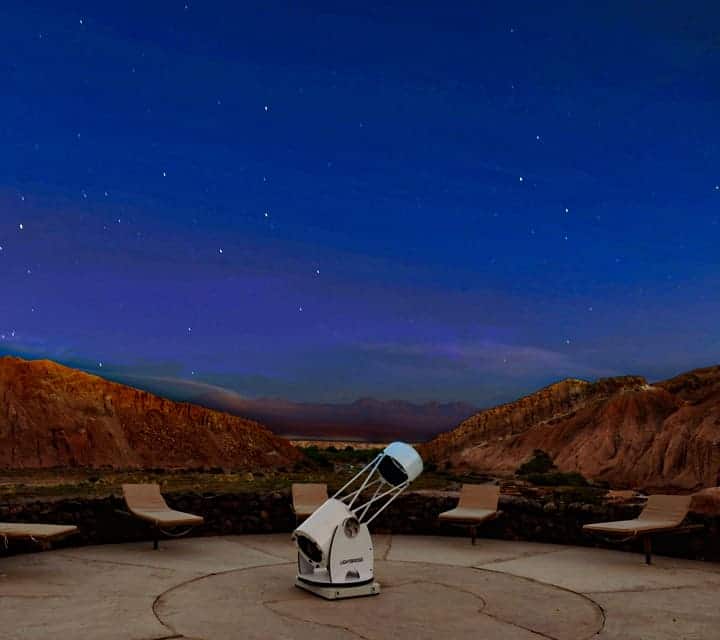
In our light-filled cities, the stars can seem far away, but in dark sky destinations—places where light pollution is virtually nonexistent—the universe reveals itself in all its glory. These are the places astro-tourists dream about, where the night sky shines so brightly you feel a deep connection with the cosmos.
Chile’s Atacama Desert, with its famously clear skies, and the wild landscapes of Patagonia, offer some of the best stargazing in the world. Here, you can see constellations like the Southern Cross and the Milky Way as they have appeared for millennia.
The Galapagos Islands, though celebrated for their wildlife, are equally remarkable for stargazing, with vast skies untainted by artificial light.
Quasar’s hand-picked local Guides know these regions intimately. They take travelers to the most secluded spots, whether deep in the valleys of Torres del Paine or along the quiet shores of the Galapagos. With Quasar, stargazing becomes more than just watching the night sky—it’s about connecting with the landscape, culture, stars, and the sense of wonder they inspire.

Exploring the Cosmos in Chile’s Atacama Desert
The Atacama Desert is an otherworldly landscape and a premier destination for photographers and astronomers alike. With more than 300 cloudless nights a year, this desert is home to some of the clearest skies on Earth. That’s why it hosts ALMA, one of the largest and most advanced astronomical observatories in the world.
On a Quasar Atacama Desert luxury tour, you’ll hike through this surreal desert by day and marvel at its expansive skies by night. Standing beneath the stars in Atacama, you’ll feel the universe expand above you, while Quasar’s expert Guides bring the celestial stories to life. The untouched desert is the perfect place for anyone seeking solitude and the magic of the stars.
Patagonia: A Celestial Wonderland
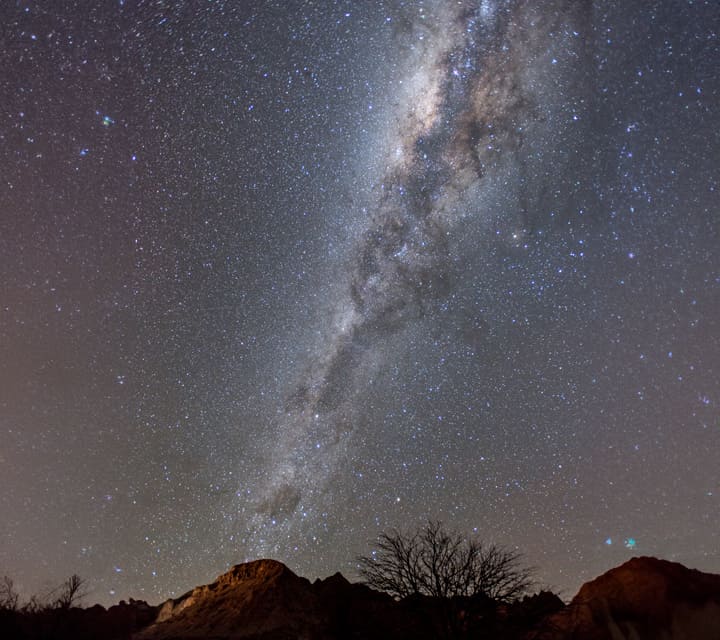
Patagonia is a land of extremes—towering peaks, shimmering glaciers, and vast expanses of wilderness. But when night falls, the landscape becomes a canvas for the stars. Far from the lights of any city, Patagonia’s skies are some of the clearest and darkest in the world.
Quasar’s Night Sky Patagonia Photography Safaris are perfect for adventurers and photographers alike. With expert naturalists guiding the way, you’ll capture the Southern Cross, the Magellanic Clouds, and the Milky Way in breathtaking clarity. Whether you’re looking to photograph the night sky or simply immerse yourself in Patagonia’s raw beauty, these tours offer an unforgettable experience.
Here’s a promise: you’ll be starstruck when you see the floor-to-ceiling view of radiant skies over the Last Hope Fjord from The Singular in Patagonia.

The Twilight Magic of Torres del Paine
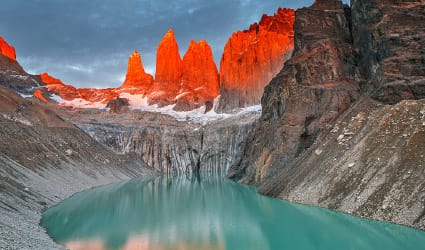
Few places rival the natural beauty of Torres del Paine National Park. When the sun sets over its rugged peaks, the park transforms into a haven for stargazers. The Milky Way stretches across the sky, and the constellations shine bright, far from the light pollution of cities.
Quasar’s stargazing experiences take you deep into the park, where the mountains seem to stand still, watching over you as you marvel at the stars. It’s a rare moment of peace and connection, a chance to experience the wilderness at its most magical.
Stargazing from a Galapagos Yacht
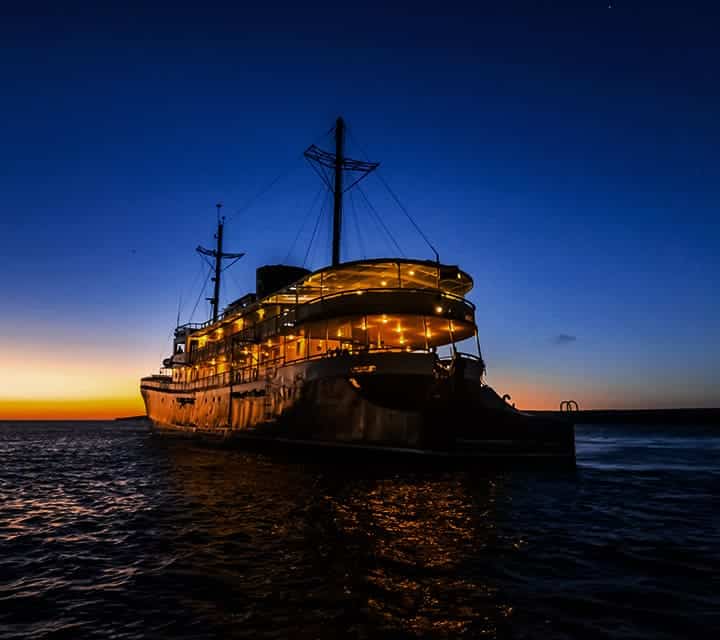
The Galapagos Islands are known for their unique wildlife, but the skies above are just as mesmerizing. Far from any urban lights, the stars here feel close, as if you could reach out and touch them. On a Quasar yacht, sailing through the Pacific, you’ll watch the constellations unfold across the sky, completely uninterrupted by the modern world.
On a personal note, I studied abroad in Italy during college, following in the footsteps of Galileo (mostly for the trip, with the science credit as a nice bonus). While the celestial sights of Rome, Florence, and Venice were breathtaking, the city lights made it hard to fully appreciate the stars. In contrast, the clearest, most spectacular skies I’ve ever seen were from the bow of our Galapagos yacht with Quasar. And thankfully, no carry-on telescope was required for that.
As the waves lap softly against the hull, the stars above will transport you to another realm, whether you’re a night sky novice or an astronomy expert. Whether you join us on a Luxury Yacht Safari or Photography Safari, you’ll experience the perfect balance of adventure, serenity, and the raw beauty of nature.

An Invitation to Look Up
At Quasar Expeditions, we’ve spent nearly four decades guiding travelers through some of the world’s most extraordinary landscapes. Now, we invite you to journey beyond them. Astro-tourism is a chance to rediscover the magic of the universe, to slow down, and to connect deeply with the world above and around you.
From the untouched deserts of Chile to the glaciers of Patagonia and the remote waters of the Galapagos, let Quasar take you on an adventure that will leave you with a renewed sense of wonder—one that reaches beyond the stars.
