Written by Fernando Diez Marketing Director at Quasar Expeditions
Updated: June 22, 2026 Published: September 17, 2025
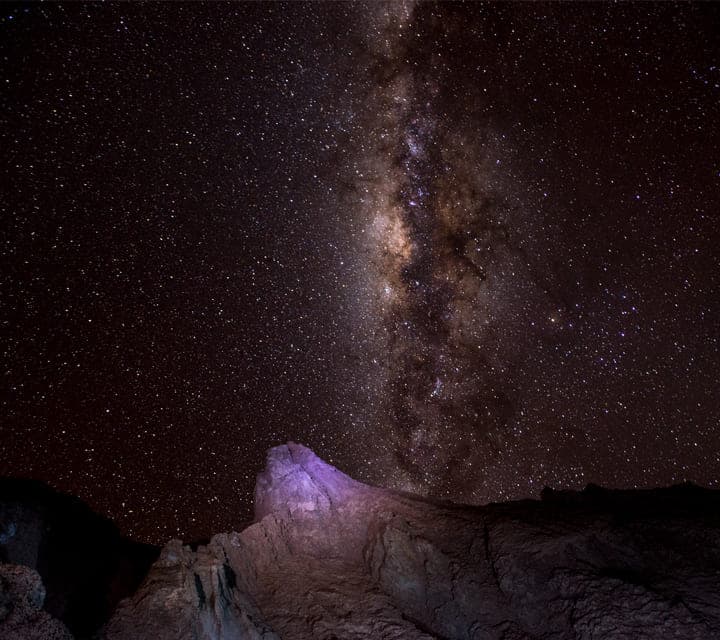
Imagine standing beneath a night sky so clear it feels as if the universe is reaching down to meet you. You’re at 7,900 feet, feeling as though you can touch the stars.
In Chile’s Atacama Desert, one of the most otherworldly landscapes on Earth, the cosmos becomes part of your nightly ritual. Here, where the silence is broken only by your breath and the flicker of starlight, stargazing becomes a profound experience. There’s a reason it’s one of the world’s premier Dark Sky regions, rivaling locations like Hawaii’s Mauna Kea and Spain’s La Palma.
With Astro-tourism on the rise, an Atacama Desert Luxury Tour is a natural choice. After all, the region boasts more than 300 cloudless nights a year, making it home to some of the clearest skies on Earth. That’s also why it hosts the ALMA, one of the largest and most advanced astronomical observatories in the world.
For Quasar Guests seeking meaningful encounters with nature and the cosmos, stargazing in the Atacama Desert offers something utterly unique: a chance to connect with space, time, and ancient wisdom under one of the clearest skies on the planet.
Key Takeaways - Stargazing in Atacama
The Atacama Desert is one of the best places in the world for stargazing with Quasar — thanks to its high altitude, dry climate, and exceptionally clear skies.
The night sky feels intensely vivid and immersive - with the Milky Way, constellations, and distant galaxies visible in remarkable detail.
Expert-guided stargazing deepens the experience - helping travelers understand the science, stories, and scale of what they’re seeing.
Stargazing in Atacama becomes a profound, almost humbling moment - connecting travelers to something far beyond the landscape itself.
Why the Atacama Desert Is an Astronomer’s Paradise
Here’s why we love the Atacama Desert for stargazing—it isn’t just a backdrop for celestial viewing; it’s a finely tuned observatory built by nature itself. With its rare combination of environmental conditions, the Atacama consistently ranks as one of the top places on Earth for astronomy. Combining the near absence of light pollution, the remote location, and lack of urban development, you can glimpse the Milky Way with unaided eyes.
Altitude, Air Quality, and Aridity
At over 8,000 feet above sea level, the Atacama Desert delivers rarefied air and high-altitude clarity. Its extreme aridity—receiving less than 0.04 inches of rain annually—means there’s little atmospheric moisture to obscure your view of the stars. Blend that with the exceptionally low air pollution, and you get an astronomical environment that professionals and amateurs alike put on their bucket lists (and the kind of once-in-a-lifetime view you were only daydreaming about before your Quasar trip).
Excellent Sky Conditions Year-Round
Consistently stable and dry weather means Atacama stargazing is possible nearly every night of the year (unless there’s a full moon, which is another exceptional sight all on its own!). While the skies are often clear year-round, the best time to visit the Atacama Desert for stargazing generally falls between March and October when celestial events are frequent and skies are darkest.
Planning the Perfect Stargazing Adventure
To witness the cosmic spectacle in comfort and safety, a little planning goes a long way. With decades of expedition experience, we’ve made it easy to explore the Atacama Desert as an independent trip or in combination with your Quasar Patagonia luxury Safari. There’s something to see all year! Don’t let limited time off limit you. We’ve rounded up a few expert tips to get the most out of Atacama from our Expedition Designer, Tasha.
Best Times of Year for Celestial Events
April to August: The Milky Way dominates the southern skies.
August: The Perseids meteor shower peaks.
December: The Geminids offer bright and colorful meteor trails.
Year-round: Saturn, Jupiter, and Venus often grace the sky.
What to Pack for a Night Under the Stars
Desert temperatures drop sharply after sunset. Pack warm layers, thermal blankets, and a reclining chair. Don’t forget sunscreen for the day, red-light flashlights for night use, and hydrate early and often while you’re in the desert.
Choosing the Right Stargazing Equipment
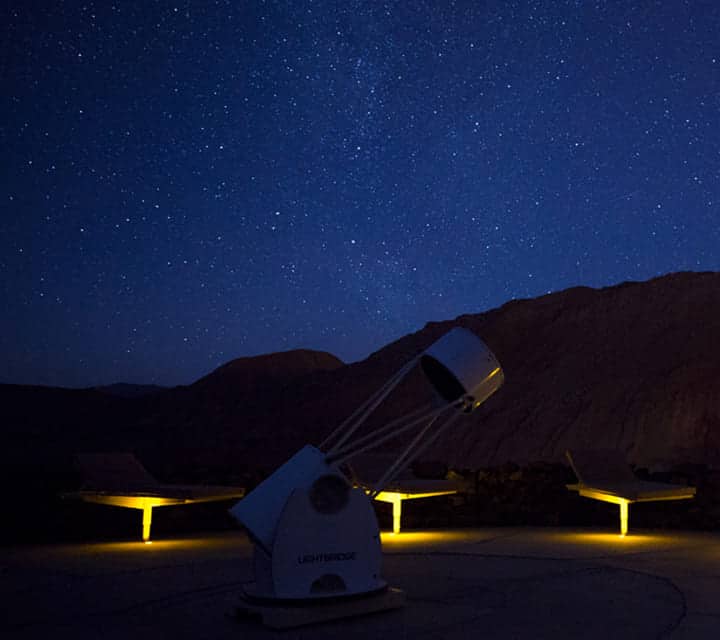
First-time stargazers can start with binoculars and astronomy apps like Star Walk or Sky Guide. For more serious enthusiasts, DSLRs with wide-angle lenses, star trackers, and portable telescopes can elevate the experience.
Expert-Led Stargazing: Tours and Observatories
To dive deeper into the astronomical wonders of the Atacama, guided tours and observatories provide both education and equipment.
ALMA and Other World-Class Observatories
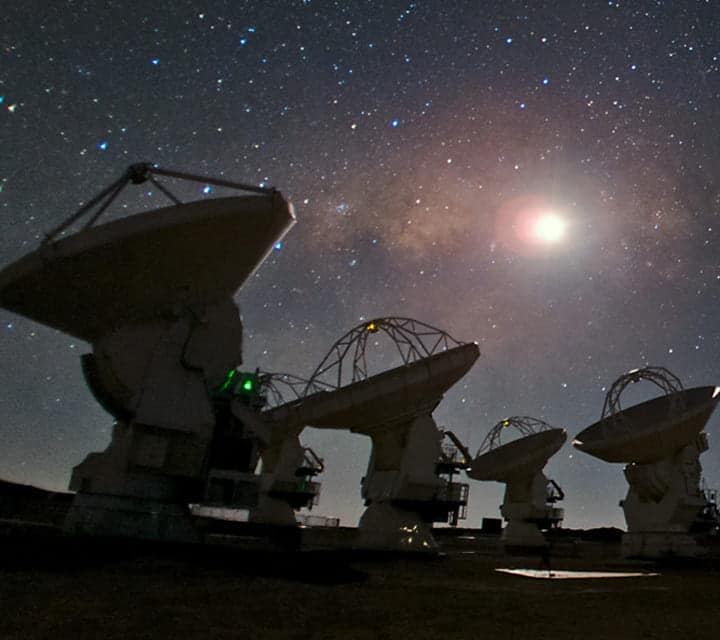
The Atacama Large Millimeter/submillimeter Array (ALMA) is the crown jewel of Atacama observatories. With 66 radio telescopes stretching across the Chajnantor Plateau, it’s the most powerful observatory of its kind on Earth. Visitors can join Saturday tours (with advance reservations) to learn how scientists peer into the early universe.
Guided Stargazing in the Atacama Desert
A number of local operators offer tailored Atacama Desert tours, often led by expert astronomers. These guides provide deep insights into constellations, celestial events, and the use of high-powered telescopes. Tours can range from intimate gatherings in remote locations to luxurious experiences that pair stargazing with Chilean wine and gourmet snacks.
Explore luxury tours of the Atacama Desert curated by Quasar to pair astronomy with authentic adventure.
How to Photograph the Atacama Night Sky
Even amateur photographers can capture spellbinding images of the Atacama Desert night sky with the right setup.
Ideal Camera Settings and Shooting Techniques
Aperture: f/2.8 or wider
Shutter Speed: 15–30 seconds
ISO: 1600 to 3200
Focus: Manual focus set to infinity
Set your camera on a tripod, use a remote shutter or timer, and experiment with foreground elements—silhouetted cacti, salt flats, or rock formations.
Editing and Enhancing Astrophotography
Use software like Lightroom or Photoshop to adjust contrast, clarity, and saturation. Reduce noise while preserving detail, and consider layering multiple exposures for dramatic Milky Way compositions.
4 Critical Mistakes to Avoid When Planning An Atacama Desert Adventure
Download this MUST-HAVE GUIDE to avoid the mistakes that 90% of travelers make when visiting the Atacama Desert.
Fill out the form below and check your inbox in a few minutes.
Celestial Knowledge Through Indigenous Eyes
Long before modern science mapped the stars, local Indigenous communities looked skyward for guidance, spirituality, and seasonal cues.
Traditional Star Mapping and Navigation
The Atacameño and other Indigenous peoples of the Andes used constellations and planetary cycles for agriculture, ceremonies, and navigation across this stark landscape. Their sky lore is rich with metaphors and meanings tied to the earth.
Preserving and Sharing Indigenous Astronomical Wisdom
Museums in San Pedro de Atacama and community-led initiatives are working to preserve this ancient celestial wisdom. Participating in a cultural astronomy program offers a deeper, more grounded experience of the stars.
Your Gateway to the Universe
Our name reflects our promise—Quasar Expeditions even has a night-sky origin.
A “quasar” is one of the brightest forces in the universe, full of light, power, and motion. For centuries, sailors and nomads looked to quasars as brilliant points of light to navigate uncharted horizons. We chose the name because we believe travel should guide and illuminate. Our journeys are outward adventures with inward rewards. Like a quasar, we help you find your place in the world through moments of wonder, connection, and clarity.
Whether you’re a seasoned astronomer or a curious traveler, Atacama Desert stargazing is a journey into one of the most untouched night skies on Earth. The blend of natural conditions, scientific infrastructure, and cultural heritage makes it a true gateway to the universe.
Now is the perfect time to plan your celestial escape.
Discover how luxury travel in Chile with Quasar can connect you with the cosmos like never before.
Hi, I am Fernando and travel is my passion. This passion began with my first trip to the Galapagos Islands in 1986 and later became my work when I started working at Quasar Expeditions. Now the Marketing Director for Quasar and responsible for the creation of the Patagonia Project in Chile, my passion for travel continues to grow to new and exciting destinations in South America.
For anyone who’s read Mr. Popper’s Penguins or enjoyed watching these flightless seabirds zip around an aquarium or zoo, a trip to Antarctica might seem like the ultimate treat for curious children. Where else can you go to watch penguins slide around on ice, in nature? That said, traveling to the ends of the earth …
Machu Picchu has long captivated travelers with its remarkable history and mystical mountain setting. But as you’re planning a trip to this wonder of the world, the logistics can feel like an obstacle that stands in the way of your bucket-list adventure. How do you actually get to this remote Incan citadel? What’s the closest …
Most travelers reach Peru by flying into Lima, the country’s main international gateway. From there, domestic flights and other connections make it easy to explore destinations like Cusco, Machu Picchu, the Sacred Valley, the Amazon, and beyond. That is the practical answer. The more meaningful one is that Peru is not a destination that reveals …
Close your eyes and imagine arriving in Antarctica. Maybe you’re bundled up in layers on the deck of an expedition ship, and rewarded with the sight of white cliffs emerging from an inky sea spotted with crumbling glaciers. Or maybe you’re touching down on a remote landing strip, watching as an endless white wilderness seems …