











Author: Fernando Diez

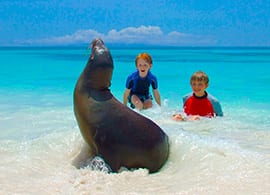
In the Galapagos, travelers trade traffic and screen time for playful swims with sea lions and up-close encounters with penguins, tortoises, dolphins, and iguanas. But pair that with an Amazon River expedition, and you’ve got something even more extraordinary: the closest thing to an African wildlife safari in the Western …
Continue reading “Rare Footage of Galapagos Nazca Booby Laying Eggs”
READ MORE
NAZCA BOOBIES Nazca boobies are common residents of Galapagos, with an estimated population between 15,000 – 20,000 pairs. They were formerly treated as a subspecies of the Masked Booby (sula dactylatra), which is why they are often still referred to as Masked boobies. However, they…
Spanish name: Locro de Papa Preparation time: 45 minutes to 1 hour. Servings: 4 to 6 Ingredients: Oil or butter -- 1/4 cup Onion, minced -- 1/2 cup Garlic, minced -- 3 to 4 cloves Optional: 2 aji amarillo (yellow chili peppers) to give soup…
Spanish name: Pez Brujo en Mantequilla de limon y alcaparras Preparation time: 30 minutes. Servings: 4 to 6. Ingredients: 1/2 tablespoon olive oil 1/2 tablespoon butter 2 speckled scorpionfish fillets (about 2 1Ž2 lbs) – can also use halibut or sea bass Salt and pepper…
A new shark species has been identified by scientists near the Galapagos Islands, Ecuador. This shark, similar in some ways to a catshark, is a spotted, bottom-dwelling shark that lives in deep waters. It has a wide mouth, which makes it an effective predator to…
A type of giant Galapagos tortoise that was thought to be extinct has been “found” in the genome of a similar species. This species, known as Chelonoidis elephantopus, lives in the genome of its close relative which currently lives in the Galapagos Islands. Chelonoidis elephantopus…
- PREVIOUS PAGE
- 1
- . . .
- 10
- 11
- 12