Tracking pumas in Torres del Paine with Quasar is one of the most unique wildlife experiences in Patagonia, combining expert-guided tracking, patience, and the rare opportunity to observe these elusive animals in the wild.
“I know that if I had been on my own—even trying hard, even being smart about it—I would not have seen any pumas.”
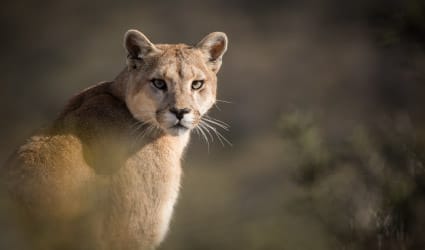
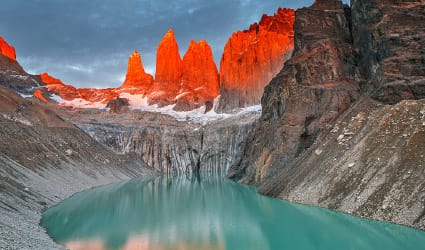
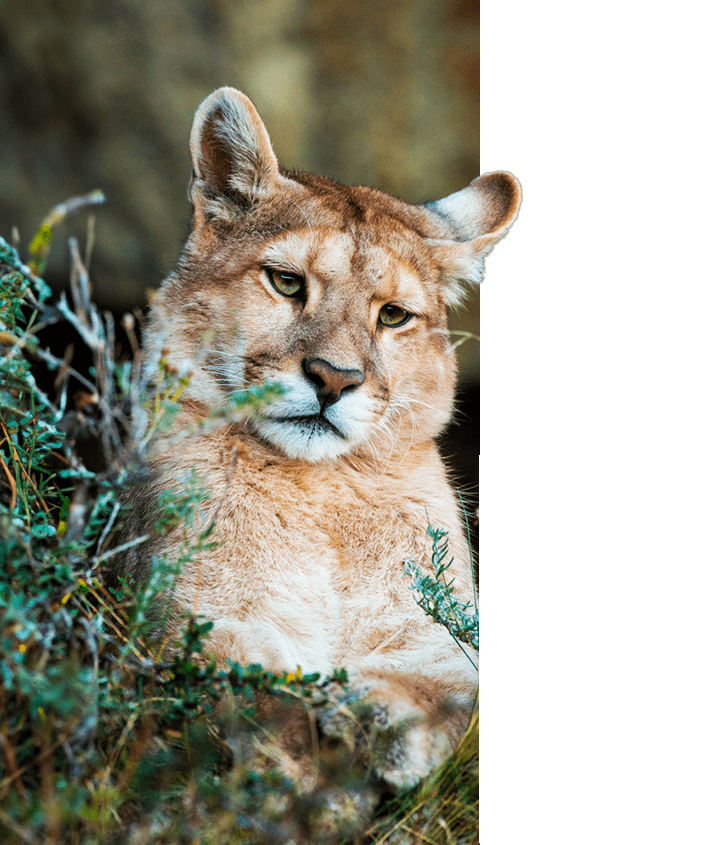
That was travel journalist Karen Catchpole reflecting on her Private Puma Tracking Safari with Quasar in Patagonia, where she spent her days moving from one once-in-a-lifetime moment to the next. There, in the untamed heart of Chilean Patagonia, where the jagged granite towers of Torres del Paine National Park rise above the pampas, she came lens-to-face with one of South America’s most elusive predators: the puma, often called the ghost of the Andes.
This powerful feline moves quietly through a land of striking beauty. Sightings are far from guaranteed. But with a dedicated Quasar Puma Guide and private Puma Tracker at her side, Karen had four expert eyes and ears working together to maximize her chances of seeing the world’s largest mountain lion in the wild.
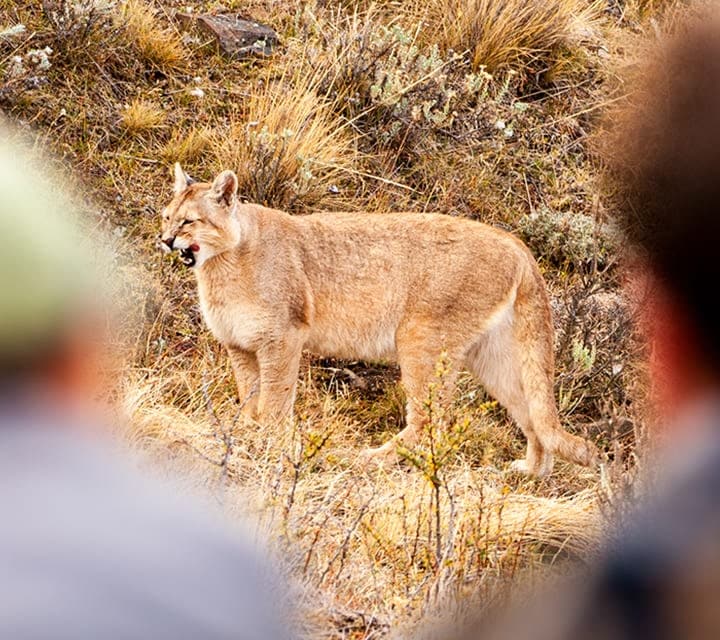
If your bucket list includes rare wildlife sightings that take your breath away, like Karen, our Puma Tracking Safaris were made for you. Each day, you’re accompanied by an expert Puma Guide and Private Puma Tracker as you head out on a safe, noninvasive adventure in search of these felines. Trackers rise before dawn to seek out the cunning cats, then report back to the group’s Guide. Together, the group can approach the pumas in the least disruptive way possible, so as not to elicit a change in their behavior. It’s a dedicated search, but never an intrusion.
Still, pumas are wild animals, and nature writes its own script. But with Quasar, your chances of a face-to-face encounter dramatically increase, making this one of the most extraordinary and rewarding adventures in Patagonia, especially for wildlife enthusiasts and photographers seeking that once-in-a-lifetime shot.
Tracking pumas with Quasar isn’t just about seeing them. It’s about understanding them—and the wild landscapes they call home. It’s a deeper kind of travel, where every moment brings you closer to the spirit of Patagonia.
Key Takeaways
Tracking pumas in Torres del Paine with Quasar is a rare and immersive wildlife experience - requiring patience, timing, and a deep understanding of the landscape.
The park is one of the best places in the world to observe wild pumas - thanks to conservation efforts and a thriving ecosystem that supports these elusive predators.
Expert trackers and guides play a critical role in every sighting - reading subtle signs, behavior patterns, and terrain to locate animals in the wild.
The experience is about more than the sighting itself - it’s about the anticipation, connection to nature, and the privilege of witnessing Patagonia’s raw wilderness.
A once-in-a-lifetime tour to see Patagonia Pumas safely and in their natural habitat
What if you could experience the awe-inspiring landscape of the Torres del Paine National Park and also witness the mystery and beauty of the Patagonia Puma? With Quasar’s Untamed Puma Safari tour, you can.
When Is the Best Time to See Pumas in Patagonia?
Seasonal changes dramatically affect puma behavior in Torres del Paine, and understanding these rhythms is key to a successful tracking experience. Quasar’s Puma Trackers and Naturalist Guides have their finger on the pulse of the region and puma behavior—after all, they want to see them as much as you do!
Our Puma Tracking Safaris take advantage of Patagonia’s “Secret Season,” from May through September, one of the very best times to discover pumas. It’s also a fantastic time to spot other iconic wildlife in the region, including Andean condors, culpeo fox, Chilean huemul, guanaco, and more—because we know wildlife enthusiasts like you simply can’t get enough sightings.
Why Winter Months Offer the Highest Chance of Puma Sightings
Between May and August, Patagonia transitions to its winter season. With fewer tourists and thinner vegetation, visibility improves dramatically, making it the prime window for puma sightings. During this season’s shorter days of 7-8 hours, it becomes easier to spot the cats. Instead of having to awaken at 4 am as you would in the summer, you can head out between 10 am and 5 pm. In fact, some local trackers report an increase of up to 60% in sightings during these months.
While temperatures can drop to 28°F/-2°C, the calm and windless conditions this time of year make the chill far more comfortable. With the right gear (which we’ll ensure you have), you’ll stay warm throughout the tracking—and be rewarded with unforgettable sightings of these magnificent animals in their natural habitat.
Where Should You Stay to Maximize Puma Sightings?
Choosing your base wisely can significantly impact your success in spotting pumas in Torres del Paine. Luckily for you, we’ve taken the guesswork out of the puma planning and ensure that you’re in the most optimal areas for sightings.
Top Accommodation Areas in Torres del Paine for Wildlife Viewing
The Laguna Amarga sector is one of the best areas in Torres del Paine for wildlife, thanks to its location near established puma territories. If you’re tracking pumas between the months of October and April, staying at a lodge close to Laguna Amarga is ideal. With those shorter days, proximity makes a big difference to maximize your rest time back at the lodge.
From May to September, the lodging options expand to include the Rio Serrano village, located on the park’s western edge. With later sunrises during these months (8–9 am) and earlier sunsets (around 6pm), you’ll have more time to rest between outings, making these shorter days far less exhausting than in summer.
What You’ll Need for a Safe Puma Tracking Expedition
Venturing into the Patagonian wilds requires more than curiosity and you can count on Quasar’s years of experience to keep you safe and comfortable. Consider these tips:
Camera Gear for Photographing Pumas in the Wild
For wildlife photographers, a DSLR or mirrorless camera with a 200mm or longer telephoto lens is essential. Tripods or monopods offer stability in windy conditions, and a rain cover helps protect gear from Patagonia’s unpredictable weather. Shoot in burst mode to capture fleeting moments, and adjust your settings for early morning or golden hour lighting.
Request Detailed PDF Itinerary
Enter your details to receive the Patagonia Puma Tracking Safari itinerary in your inbox. Enjoy a detailed day-by-day description of the activities, highlights and wildlife you can expect to see!
Fill out the form below and check your inbox in a few minutes.
Protective and Navigation Gear for Harsh Terrain & Weather
Layered clothing is vital to manage temperature swings. Waterproof hiking boots with ankle support, walking poles, a first aid kit, and a GPS device or offline map app round out the essentials. Patagonia’s weather can shift suddenly, so waterproof outerwear and thermal underlayers are highly recommended. As always, we will make sure you have the right gear to stay safe and warm and can offer suggestions on clothing choices.
Why Visiting Patagonia with a Quasar Puma Tracker Is Worth It
Our skilled Private Puma Trackers transform your wildlife adventure from a game of chance into a guided exploration rooted in knowledge and conservation. We work with the best Guides with years of experience tracking in Patagonia. They understand puma behavior in Torres del Paine—how these animals mark territory, hunt, and move through the landscape. Their deep respect for nature ensures that sightings are ethical, non-intrusive, and most of all, completely safe for both Guests and wildlife.
Top Places to Spot Pumas in Torres del Paine
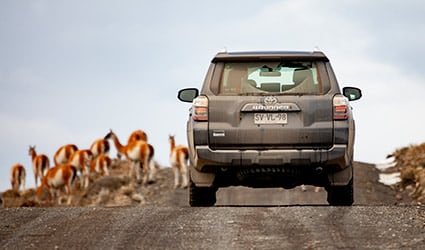
Pumas favor specific sectors of the park, many of which are accessible with the right planning and guidance. That’s where we come in. With your private 4x4 luxury vehicle, dedicated Puma Naturalist Guide, and Private Puma Tracker, you’ll have the best chances for wildlife sightings and opportunities to observe these beautiful creatures in their natural habitat.
How Pumas Use the Landscape of Torres del Paine
These apex predators thrive in areas with high guanaco populations—their primary prey. We will look for signs of puma presence near Laguna Amarga, Lago Sarmiento, and the valleys around the Estancia Laguna Azul. Although pumas are spotted throughout all of Torres del Paine National Park, these regions offer better vantage points and cover, making them ideal for ambush hunting.
Wildlife Photography Tips for Your Quasar Puma Safari
Capturing a puma on camera is a rare privilege. Doing so ethically ensures both the safety of wildlife and the integrity of your experience.
If Patagonia is on your bucket list, who you explore with matters. Let our experts show you the Patagonia most travelers never see.
Following Park Rules for Wildlife Photography
Keep at least 60 meters (200 feet) away from pumas
Stay silent during sightings
Never use flash.
Switch your camera to silent mode and avoid crowding the animal.
Quasar Guides will lead you to safe, scenic viewpoints to capture unforgettable photos of the landscape and pumas.
Remember, the goal is observation—not intrusion.
Pro Tip: Avoid strong scents like deodorant or cologne, and opt for neutral-colored clothing. This helps you blend into the environment and keeps your presence unnoticed by the pumas, giving you the best chance for a close, natural encounter.
What to Do If You Encounter a Puma
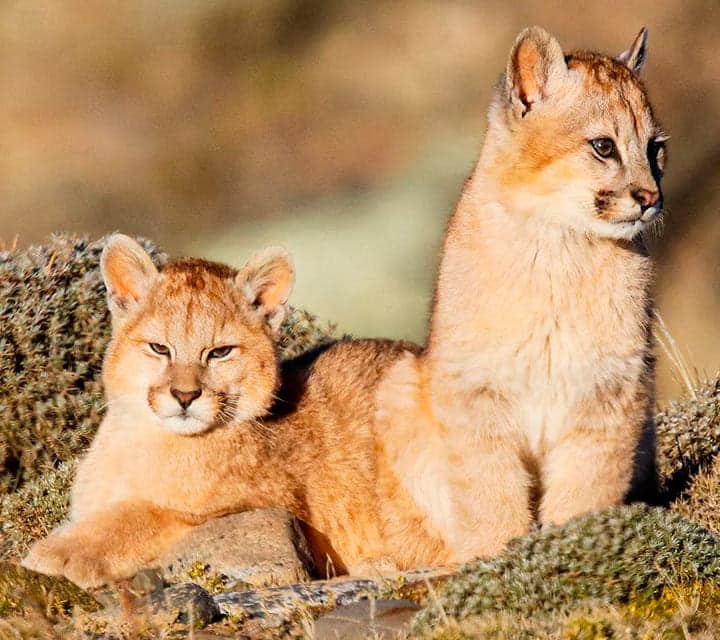
As pumas are starting to get used to visitors and vehicles, up-close encounters are becoming more common. Staying calm and prepared is key. You’ll travel with a Private Puma Tracker and Puma Guide by your side, adding an important layer of safety during puma sightings. Our expertise ensures you know how to respond calmly and appropriately, keeping both you and the wildlife safe.
Interpreting Puma Behavior in the Wild
Our Naturalist Guides and private Puma Trackers “speak” puma and know just what to do and what not to do. We’ll teach you how to read a puma’s body language, which gives us incredible insight into their movements and habits. A twitching tail or fixed stare can indicate irritation, while a low posture often signals avoidance. We never run or turn our backs against a puma. Instead, we maintain eye contact, make ourselves appear larger, and slowly back away without turning our backs. These animals generally avoid conflict, but understanding their behavior helps us respond appropriately.
Want to learn more about pumas before you go? Read our wildlife guide on Patagonia Puma.
Enhancing Your Wildlife Journey Beyond Pumas
For avid wildlife enthusiasts, Patagonia is a dream. Pumas are only one of Torres del Paine’s many wonderful wildlife species. Keep your eyes open for guanacos, Andean condors, Darwin’s rheas, foxes, eagles, finches, and much more. The interplay between predator and prey, especially the drama between pumas and guanacos, offers remarkable insights into the natural world.
Unleash Your Adventurous Spirit in Patagonia on a Private Puma Tracking Safari
Every tracking journey carries with it the thrill of the unknown. Our Guests, like Karen, often recall the moment they first locked eyes with a puma—how time seemed to stand still, how silence blanketed the landscape, broken only by the wind. These are wildlife encounters at their core, but they’re also spiritual moments, reminders of nature’s grandeur and our place within it.
Hello! My name is Tasha. I love to travel to see new places and meet new people. I am passionate about creating unique travel experiences for adventurous travelers with a desire to see some of the most remote corners of South America. I have traveled extensively to Patagonia, Chile, Argentina, Galapagos, Ecuador and many other areas of this wild continent and I am eager to share my knowledge with the world.
For anyone who’s read Mr. Popper’s Penguins or enjoyed watching these flightless seabirds zip around an aquarium or zoo, a trip to Antarctica might seem like the ultimate treat for curious children. Where else can you go to watch penguins slide around on ice, in nature? That said, traveling to the ends of the earth …
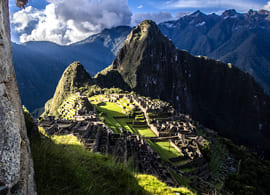
Machu Picchu has long captivated travelers with its remarkable history and mystical mountain setting. But as you’re planning a trip to this wonder of the world, the logistics can feel like an obstacle that stands in the way of your bucket-list adventure. How do you actually get to this remote Incan citadel? What’s the closest …
Most travelers reach Peru by flying into Lima, the country’s main international gateway. From there, domestic flights and other connections make it easy to explore destinations like Cusco, Machu Picchu, the Sacred Valley, the Amazon, and beyond. That is the practical answer. The more meaningful one is that Peru is not a destination that reveals …
Close your eyes and imagine arriving in Antarctica. Maybe you’re bundled up in layers on the deck of an expedition ship, and rewarded with the sight of white cliffs emerging from an inky sea spotted with crumbling glaciers. Or maybe you’re touching down on a remote landing strip, watching as an endless white wilderness seems …