


















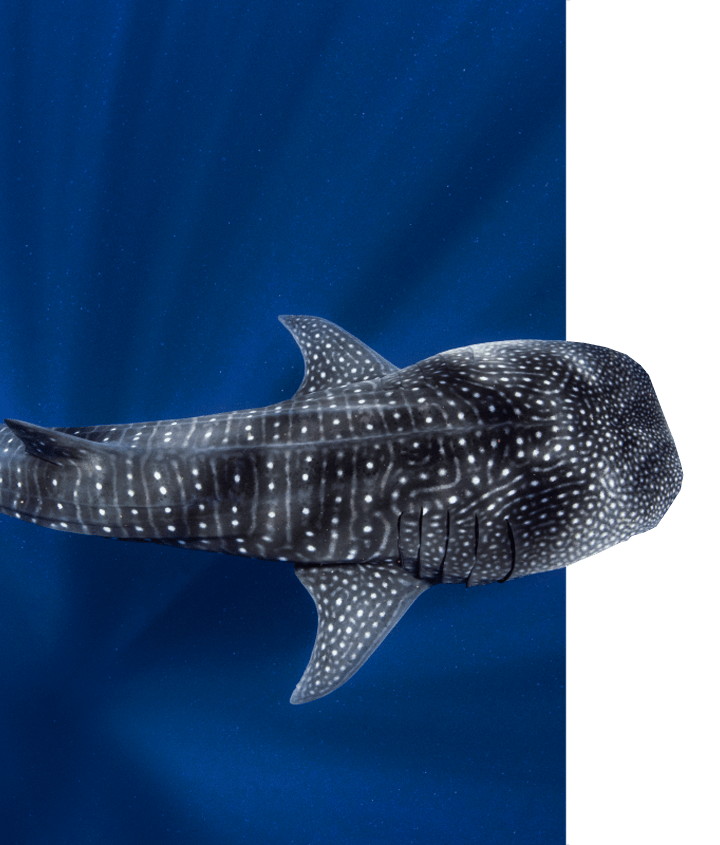
The Galapagos Islands, with their unique biodiversity and dramatic landscapes, have long been a sanctuary for adventurers and nature enthusiasts. Among the many unique species that call these islands home, one stands out for its sheer size and gentle nature—the whale shark. One particular non-profit organization in the Islands, The Galapagos Whale Shark Project (GWSP), has dedicated itself to the study and conservation of these magnificent creatures, and Quasar Expeditions is proud to support their vital work as part of our sustainability initiatives.
Who They Are
The Galapagos Whale Shark Project is a collaborative research effort that was co-founded by a former Quasar Naturalist Guide, Jonathan Greene and Dr. Alex Hearn, a Researcher and Professor of Biology at Universidad San Francisco de Quito. Driven by a dedicated team of marine biologists and conservationists, including Sofia Greene—Jonathan’s daughter and a valued friend of Quasar—the project seeks to unlock the secrets of the elusive whale shark. By studying their movements, behavior, and biology, the team generates important insights to drive the conservation and long-term survival of the ocean’s largest fish.
What They Do
The GWSP conducts a range of scientific activities to gather data and promote conservation. Their work includes satellite tagging, photo identification, ultrasounds, blood samples, and tissue samples. Each of these methods provides invaluable insights into the lives of whale sharks and helps inform conservation strategies.
Key Takeaways – Galapagos Whale Shark Project
- The Galapagos Whale Shark Project studies whale shark movements, biology, reproduction, and genetics.
- Researchers use satellite tags, photo identification, ultrasounds, blood samples, and tissue samples.
- Research helps scientists understand whale shark populations and develop effective conservation strategies.
- Quasar supports the project by funding tracking technology used to study endangered whale sharks.
Led by a passionate team of marine biologists and conservationists, the project aims to uncover the mysteries of the whale shark to ensure their protection and survival. By focusing on studying the movements, behavior, and biology of the largest fish in the ocean, they use this information as their weapon for the conservation of this magnificent species
Whale Shark Satellite Tagging
Satellite tagging is a cornerstone of the GWSP's research. By attaching satellite tags to whale sharks, researchers can track their movements both horizontally and vertically. This data reveals patterns in their navigation, diving behavior, and environmental preferences.
Over time, the tagging methodology has evolved to be less invasive and more effective. Initially, subcutaneous tags were used, but these had drawbacks. Since 2019, the project has employed pressure clamps, which are less invasive and provide longer-lasting data. This has resulted in better tracking of whale sharks such as "Esperanza," "Cocos," and "Nemo."

Photo Identification
Photo identification is another key method used by the GWSP. By photographing whale sharks and uploading these images to the "Wildbook for Whale Sharks" catalog, researchers can identify individual animals and track their presence over time.
This passive tracking method helps study population dynamics, including residency indices, return rates, abundance, and mortality. With the help of dive guides, passengers, and scientists, over 600 individual whale sharks have been registered in the Galapagos. Remarkably, some sharks have been re-sighted after 4, 9, and even 12 years, providing a wealth of data on their long-term behavior and site fidelity.

Ultrasounds on Whale Sharks
Understanding whale shark reproduction is a challenging but crucial aspect of the GWSP's work. Since over 90% of the whale sharks spotted in the Galapagos are giant adult females with large abdomens, researchers hypothesize that these females may be pregnant.
In 2017, the project teamed up with experts from the Okinawa Churaumi Aquarium to use a modified human ultrasound device underwater. Although initial attempts were inconclusive, the team continues to refine their techniques and explore the possibility of confirming pregnancies in these gentle giants.
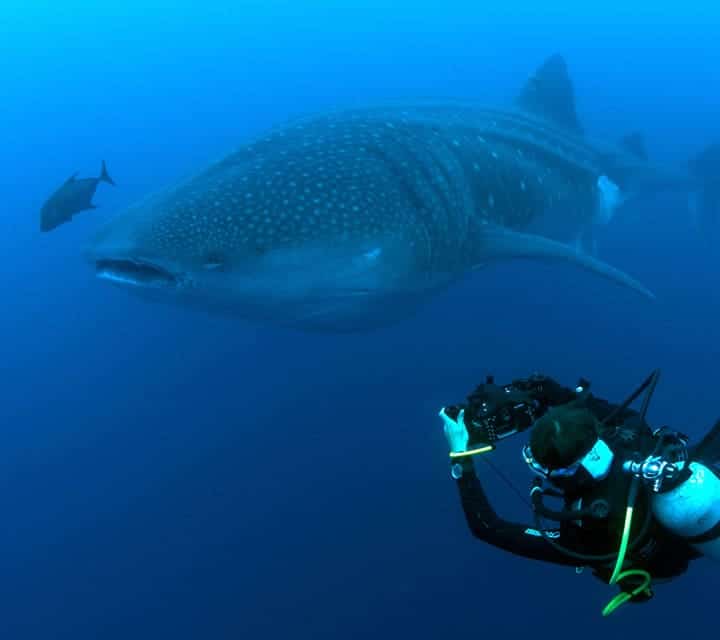
- Guarantee The Perfect Adventure
- Avoid The Crowds
- Choose The Right Yacht For You

Whale Shark Blood Samples
Blood samples are taken alongside ultrasounds to establish hormone baselines and assess the stress levels of whale sharks. This allows researchers to determine if a whale shark is pregnant based on its hormone levels. Additionally, lactic acid levels are analyzed to ensure that tagging and other research procedures do not cause stress to the animals. To date, no blood samples have indicated stress, confirming that the GWSP's methods are safe and non-invasive.
Whale Shark Tissue Samples
Tissue samples are collected to analyze the global genetics of whale sharks. By comparing samples from whale sharks worldwide, researchers can understand genetic connectivity between different populations. This information is vital for developing global conservation strategies and ensuring the long-term survival of whale sharks.

Quasar Expeditions' Support
At Quasar Expeditions, we believe in responsible travel and conservation. Our new support for the Galapagos Whale Shark Project is a testament to our commitment to preserving the natural wonders of the world.
Donations for GPS Trackers
One of the critical tools in studying whale sharks is GPS trackers. These devices provide real-time data on the movements and behavior of whale sharks, helping researchers gather essential information. Quasar Expeditions donates funds to purchase these GPS trackers, ensuring that the GWSP can continue its important work.

Why It Matters
Whale sharks are listed as endangered on the IUCN Red List, primarily due to threats such as over fishing, by-catch, and habitat destruction. The work conducted by the Galapagos Whale Shark Project is vital for understanding these threats and developing effective conservation strategies. By supporting the GWSP, we contribute to the protection of these gentle giants and the preservation of the Galapagos ecosystem.

A Personal Connection
For many of our guests, encountering a whale shark is a once-in-a-lifetime experience. These awe-inspiring moments foster a deep connection with nature and a commitment to conservation. By supporting the GWSP, we ensure that future generations can continue to experience the wonder of swimming alongside these magnificent creatures.
Join Us in Making a Difference
We invite you to join us in supporting the Galapagos Whale Shark Project. Whether through donations, spreading the word, or simply choosing to travel with a company like Quasar that funds sustainable initiatives such as this one, every action counts. At Quasar Expeditions, we are proud to support the GWSP and its mission. By working together, we can create a future where whale sharks continue to roam the oceans, inspiring awe and wonder in all who encounter them. Learn more about these graceful creatures -- Galapagos Whale Sharks
