Written by Paul Schicke Senior Expedition Designer
Updated: June 18, 2026 Published: June 21, 2017
When you’re taking a once in a lifetime trip to the Galapagos, you want to make sure you’re seeing it at its best. Luckily, due to the Galapagos’ idealistic island weather, there’s really no wrong time to visit. If you can consider traveling to Galapagos during the Fall months, or "Secret Season", of the northern hemisphere, here’s the top 10 reasons why Galapagos fall cruises are amazing.
Key Takeaways
Fall is the Galapagos’ best-kept secret - fewer travelers, exceptional wildlife activity, and a more intimate way to experience the islands.
Wildlife is at its most dynamic during Fall - cool, nutrient-rich waters attract abundant marine life, creating unforgettable, up-close encounters.
You’ll experience the islands without the crowds - smaller groups and quieter landing sites make each moment feel personal and unhurried.
It’s the ideal balance of adventure and comfort - mild temperatures and thoughtfully paced days make Fall perfect for active exploration without fatigue.
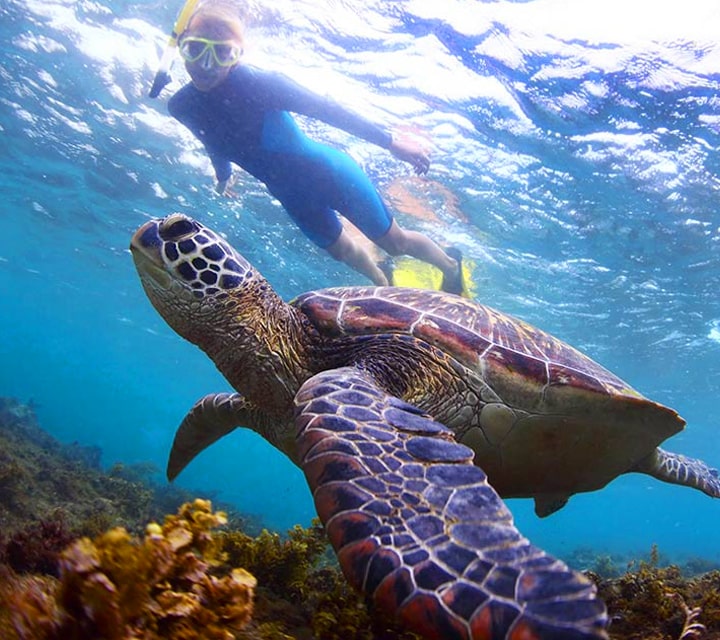
1. Best Times to Snorkel - Experience the Richest Display of Marine Life
Between July and November, the presence of the Humboldt Current in the Galapagos is strong. If you love to snorkel, you absolutely must visit Galapagos in the fall. The Humboldt Current is strong and that means the nutrients in the water are more abundant than normal. The extra nutrients make the marine life more active, meaning you will get more out of your snorkeling experience!
2. Fewer Crowds in the Galapagos Islands
High season in the Galapagos generally runs from mid-December to January and June to August each year. After August, most children are back in school and you will find less families traveling to Galapagos in the months of September, October and November. The seasons in Galapagos have nothing to do with weather, but with the holiday periods around the world. Therefore, if you can travel outside of these of these months to experience the Galapagos in the fall, you’re more likely to have a quieter and more natural experience of the Galapagos.
3. Whale & Dolphin Watching Without a Full Tour
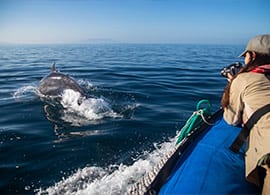
As you cruise across to Fernandina Island, keep an eye out for dolphins and whales. You normally have to pay top dollar for a whale-watching or dolphin tour, but that’s not the case when you take part in a Galapagos cruise in the Fall. In fact, you can expect to spot whales when crossing over to Fernandina Island into the Bolivar Channel. Just grab a spot on the deck or your balcony and check for whales and/or dolphins when you visit Galapagos in the fall.
4. Mild but Warm Weather with More Sunny Days
While the Galapagos enjoys quite moderate temperature variations throughout the year, the main difference in climate comes between the wet and dry seasons. And, if you’re traveling to the islands from September into early December, it’s perfect time to enjoy drier days with warm, but not too hot, temperatures. Expect daytime highs to range between 66 and 79°F (19 and 26°C) with the water a pleasant 72°F (22°C).
When to Visit Galapagos
A COMPLETE GUIDE ON GALAPAGOS SEASONS, CLIMATE, & WILDLIFE ACTIVITY
Download our detailed month-by-month guide to discover which animals you can see and what weather to expect.
Fill out the form below and check your inbox in a few minutes.
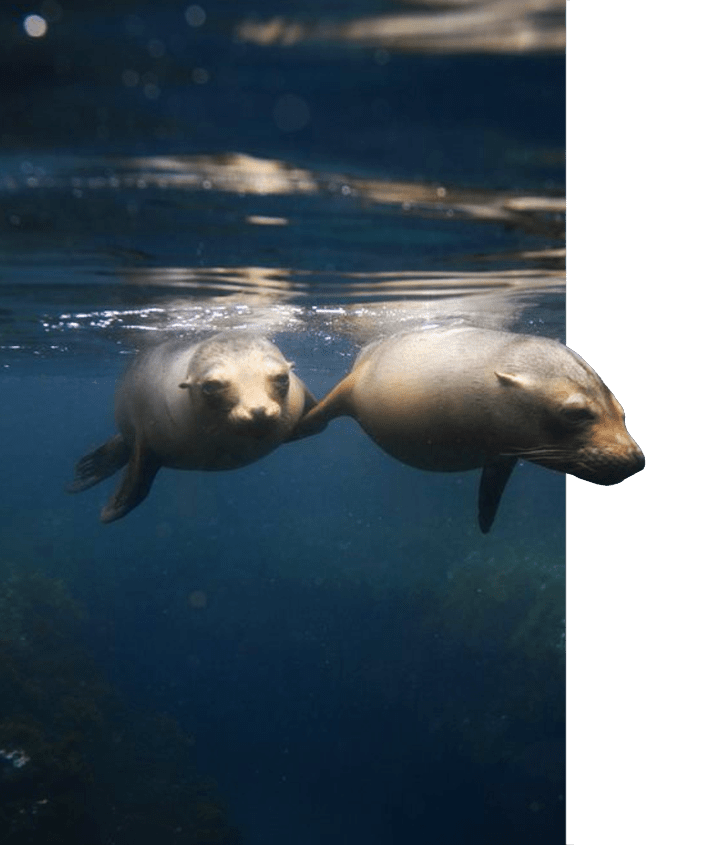
5. Swimming & Playing with Sea Lions & their Pups
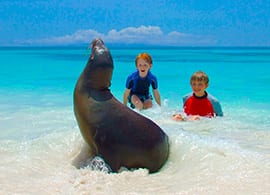
If swimming with sea lions and even their pups is on your bucket list, then fall is the best season to do it. As pups develop, they love playing around humans in the shallower water and may even nip your fins as you snorkel nearby. During November, you might also see impressive courtship displays as mature sea lions mate.
6. Great Conditions for Photographers
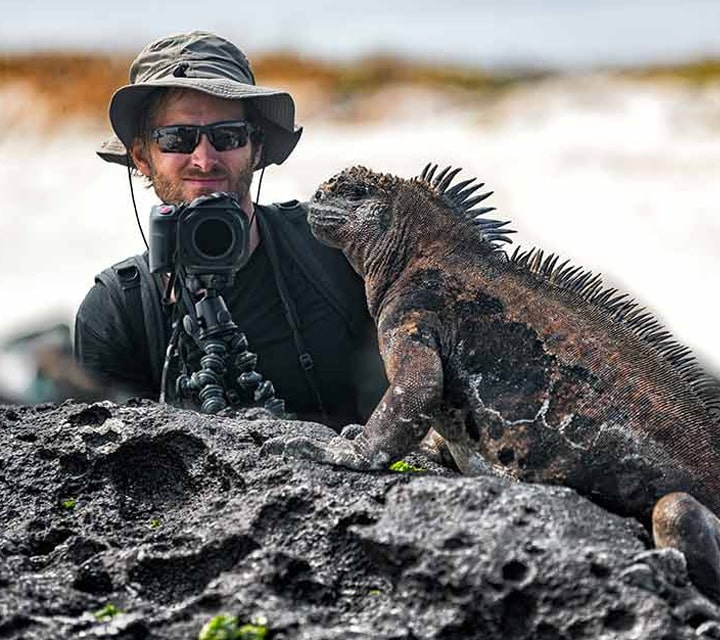
Whether you’re a professional or just want an Instagram worthy picture, fall in the Galapagos is possibly the best time to take incredible landscape photos. Less rain and a backdrop of light clouds provides excellent lighting conditions to truly capture the magic. You’re also more likely to be able to get close to nesting wildlife for amazing animal close-ups, especially on a Galapagos Photography Cruise.
7. Encounter Giant Tortoises & Their Eggs
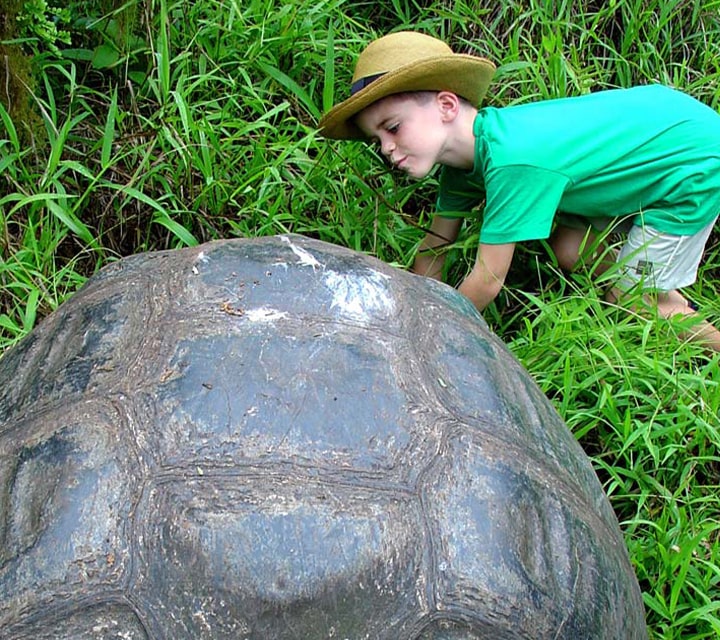
Seeing a giant Galapagos tortoise is on the ‘must’ list for almost every traveler. But, visit between June and December and you might be fortunate enough to witness giant tortoises laying eggs in the wild on Santa Cruz Island.
8. See Penguins When They’re Most Active
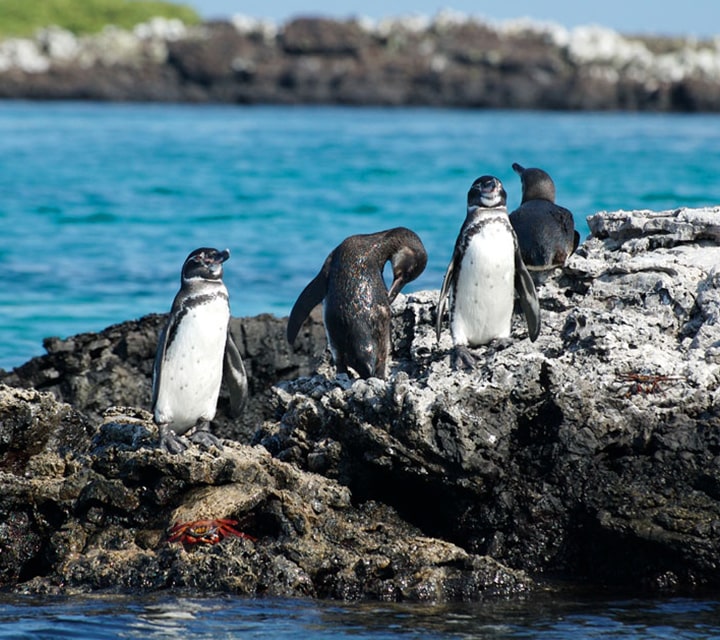
During September of every year, penguins are usually at their most active in the Galapagos. You’re likely to spot them while you’re snorkeling and diving as well as on the shore-fronts.
9. Watch Seabirds, Especially the Blue-Footed Boobies, Dance!
In the Galapagos in the fall, many Galapagos seabirds nest on the islands, allowing you to get a little closer as prospective mates show off with impressive rituals. Some of the breeds you can expect to see include blue-footed, red-footed and masked boobies, waved albatrosses and both magnificent and great frigate. Have you ever seen blue-footed boobies mating dance? The male birds do a high-stepping strut to attract females, and it is a sight to see!
10. Dive with Whale Sharks
Between June and November whale sharks migrate to the islands, offering visitors an unforgettable experience. While you might see one of these enormous, docile fish snorkeling, you’ll increase your chances greatly by joining a trustworthy diver operator.
Booking Your Galapagos Trip This Fall
If you want to enjoy these top 10 reasons to travel to the Galapagos in the fall, be sure to look at our Galapagos luxury cruise fall and winter specials. With enjoyable weather, fewer visitors and an incredible display of the wildlife you came to see, there’s no time like right now.
Hello! My name is Paul. I am photographer, traveler, teacher and writer. I have extensive experience in travel to Galapagos, Peru, Patagonia and the western seaboard of South America specializing in ways travelers can experience these once-in-a-life destinations like locals on the road. Lover of wine, chocolate, travel, coffee, and helping others plan vacations of a lifetime!
For anyone who’s read Mr. Popper’s Penguins or enjoyed watching these flightless seabirds zip around an aquarium or zoo, a trip to Antarctica might seem like the ultimate treat for curious children. Where else can you go to watch penguins slide around on ice, in nature? That said, traveling to the ends of the earth …
Machu Picchu has long captivated travelers with its remarkable history and mystical mountain setting. But as you’re planning a trip to this wonder of the world, the logistics can feel like an obstacle that stands in the way of your bucket-list adventure. How do you actually get to this remote Incan citadel? What’s the closest …
Most travelers reach Peru by flying into Lima, the country’s main international gateway. From there, domestic flights and other connections make it easy to explore destinations like Cusco, Machu Picchu, the Sacred Valley, the Amazon, and beyond. That is the practical answer. The more meaningful one is that Peru is not a destination that reveals …
Close your eyes and imagine arriving in Antarctica. Maybe you’re bundled up in layers on the deck of an expedition ship, and rewarded with the sight of white cliffs emerging from an inky sea spotted with crumbling glaciers. Or maybe you’re touching down on a remote landing strip, watching as an endless white wilderness seems …